

Beyond giving consent, what does a photographer still owe their subject?
In December 2012, Pete Souza1 (The Photo Society)travelled with Barack Obama to Newtown, Connecticut, after the shooting at Sandy Hook Elementary School. As Obama’s Chief Official White House Photographer, Souza was there to document the visit. But photographing grieving families was different from photographing a meeting in the Oval Office. The families knew that a White House photographer would be there and Souza tried to remain unobtrusive. When someone seemed uncomfortable with his presence, he backed away.
He still made photographs. Now, what happened to those photographs afterward was another matter.
There was one detail that stood out to me, when I went back to our interview with Pete Souza for this article. The photographs from private meetings with grieving families were not made public unless the families gave permission. These families received photographs from the meetings, but without that permission, the images remained private.
One of those photographs came from Newtown and for years, that was where it stayed.
Then, about five years later, Souza was working on his book Obama: An Intimate Portrait. The book was intended to show Obama not only as president but, well, as a human being. Souza thought the Newtown photograph belonged in that story.
He already had the photograph. But instead of simply putting it in the book, he actually went back to the family and showed them a mock-up. He explained where the photograph would appear and why he wanted to include it. And he made something else clear: if they did not want the photograph in the book, he would remove it.
The family agreed.
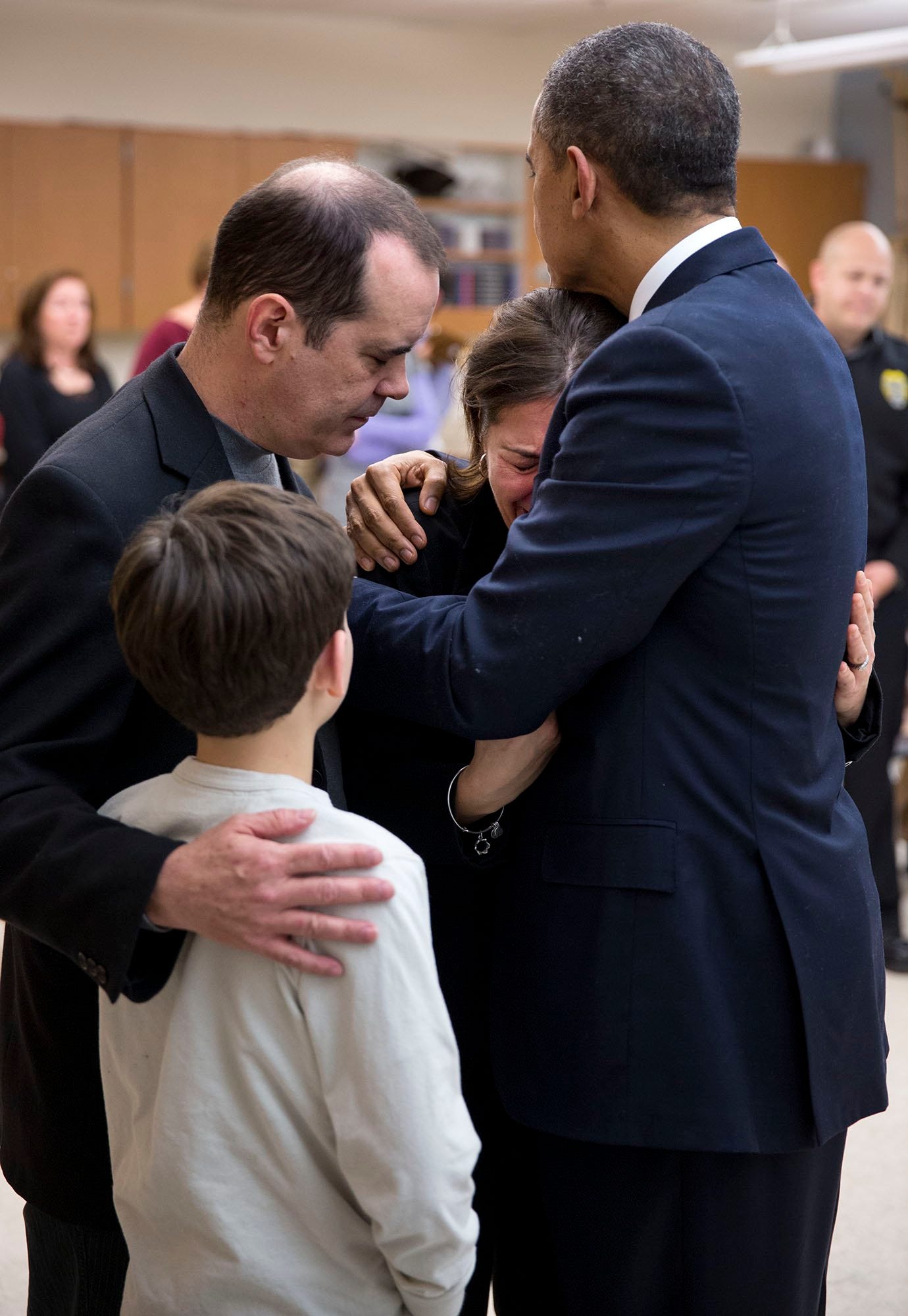
What interests me about this story is not whether Souza made the right decision. It is that he felt there was another decision to make at all. Nothing about the photograph itself had changed during those five years, but what Souza was asking it to do had.
A photograph that had remained private was about to become part of a publicly available book, seen by an entirely different audience. The original photographic encounter could not tell Souza whether he should publish it now.
Permission to make a photograph does not necessarily settle every later decision about what happens to it.
This isn’t just true for situations as difficult as Newtown. Photos often last longer than the events they capture. Years later, they might appear in a book, an exhibition, or be used for something nobody considered when they were taken.
Souza’s solution seems straightforward and, when the circumstances change enough, perhaps the photographer should simply ask again.
But that creates another problem.
If someone agreed to be photographed, how much say should they have over what happens next?
Should they be able to approve the photograph that is selected? Its publication? The way it appears in a project? And if photography is collaborative, does that also make the person being photographed a collaborator in the final edit?
This is where consent stops giving us an easy answer.
