

Wesley Verhoeve has spent years helping other photographers be seen. As founding curator of the Projected series at the International Center of Photography in New York, he showed the work of more than 300 photographers from 53 countries. His own work is about noticing: slowing down and paying attention to everyday life. He writes about photography and creative work every week in Process, his newsletter here on Substack, and shares his photographs on Instagram as @wesley.
Wesley Verhoeve photographs first and finds the story later.
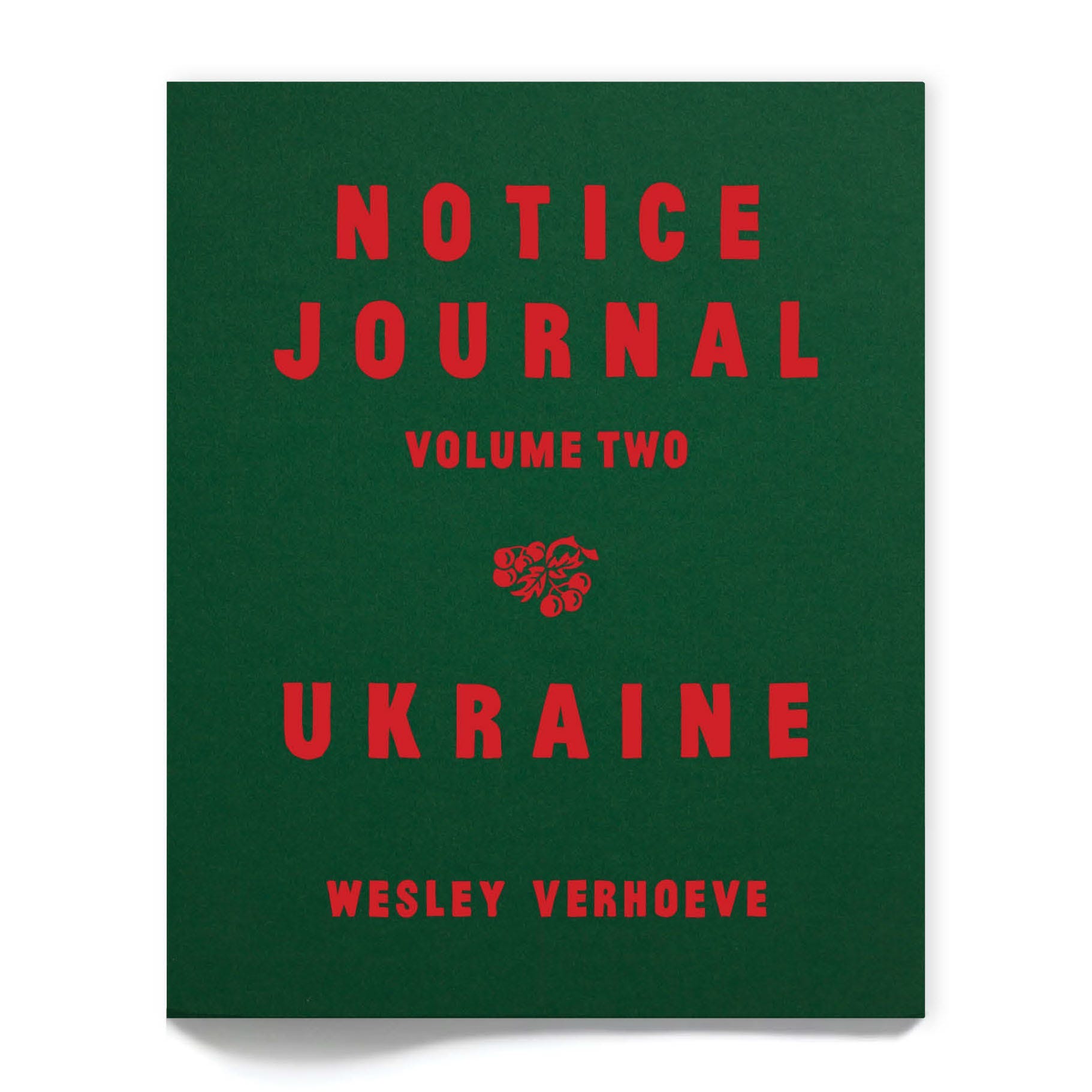
His new book follows his partner’s extended family in Ukraine during the summer of 2025. In this conversation, he talks about why he chose not to photograph the war itself, how one ordinary photograph found its place in the book, and why he builds each book around one sentence.
You made a deliberate decision not to photograph the war itself, even though it is present in the background of the entire book. When did you make that decision, and what did it allow you to photograph instead?
I have the utmost respect for conflict photographers, the people who really go out and document the violence, the destruction and the war. What they do is so important. The fact that we in the rest of the world get to bear witness to it can hopefully help it end sooner. I don't know exactly, but it is super important and very brave work. I am not that kind of photographer. I am not that brave, and that is not where my eye goes anyway.
Also, we didn't go to the front. The areas we visited are affected by the war, but real war photographers go to the front, where there is constant violence and things happen at great speed. I could have photographed some things, though not as much as conflict photographers do when they are there. But it is just not what I do, and I didn't want to pretend. I focus on small moments and human details, wherever my eye goes. I just don't think I would be very good at the other kind of work.
Was there ever a moment when you almost broke that rule because something directly connected to the war appeared in front of you?
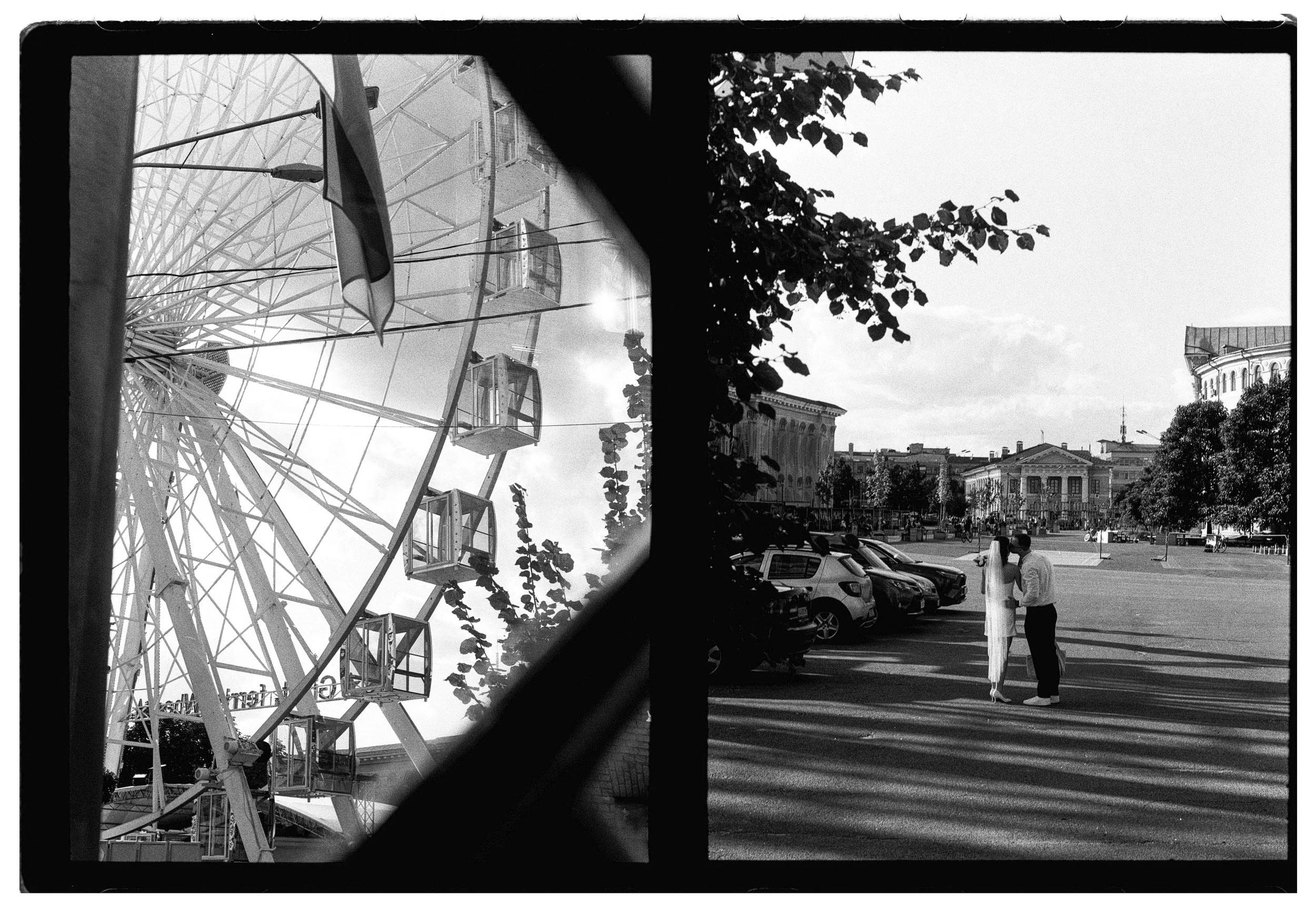
Yes. One of the last two photos in the book is the only one with something war-related in it. It is a diptych showing sandbags piled up in front of an important building and its windows, which you see a lot over there for protection. I took that diptych, then turned 180 degrees and took two more photos. One shows a newlywed couple taking a selfie in front of the courthouse. The other shows a Ferris wheel, which is, of course, an object of fun and entertainment.
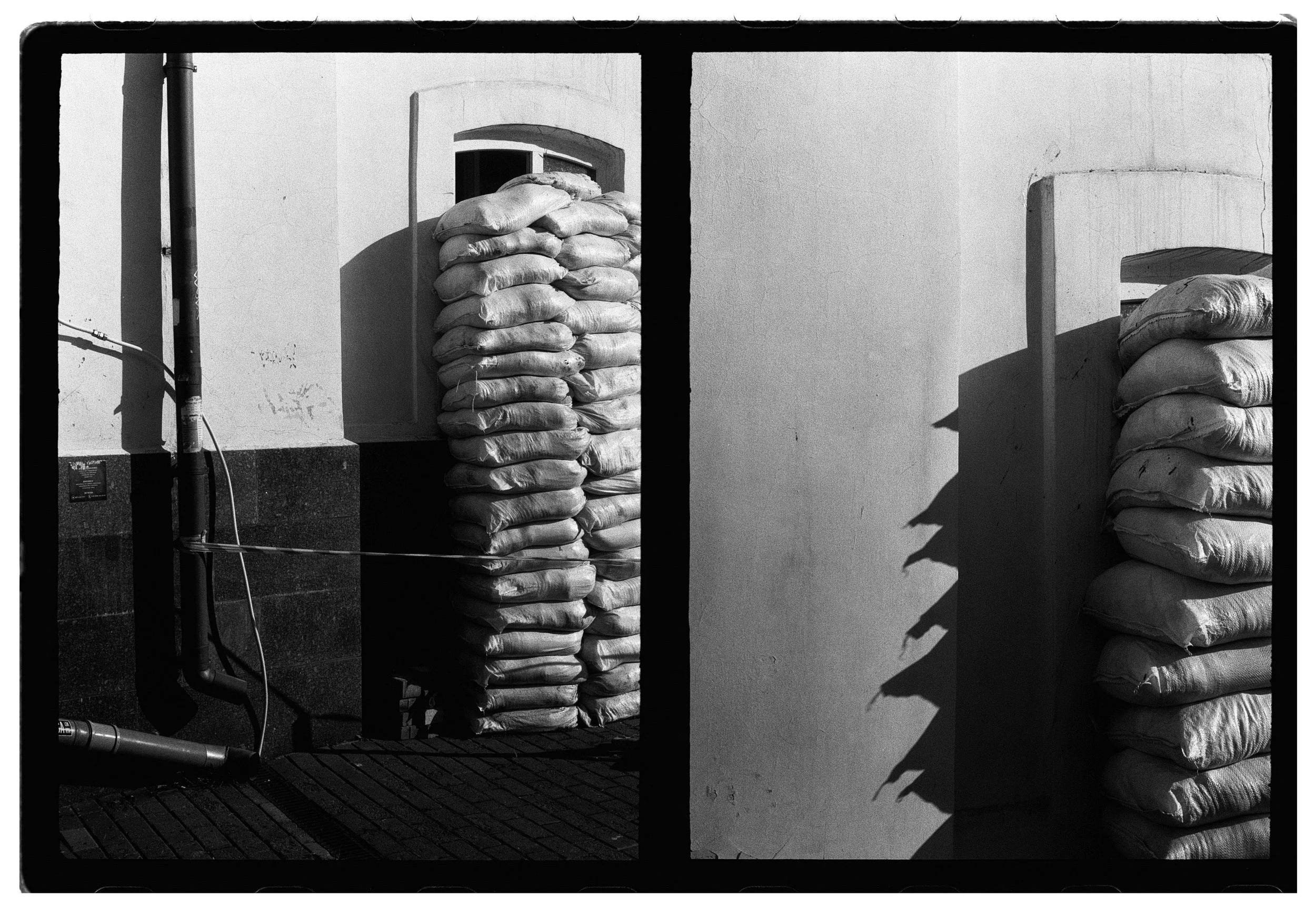
So the only time you see something of the war in the book is at the end. It is there to show the real story, the dichotomy that the war is going on and real life is going on too. This strength and this beauty exist at the same time. For me, as someone who has only ever lived in a country not at war, it was special to see that people keep going. Of course it is terrifying, there are all kinds of terrible things happening, and it needs to stop as soon as possible. But life is also happening. People are getting married, starting businesses, studying and loving. All of that is happening at the same time.
Was there an ordinary photo that became much more important to you once you saw it alongside the rest of the work?
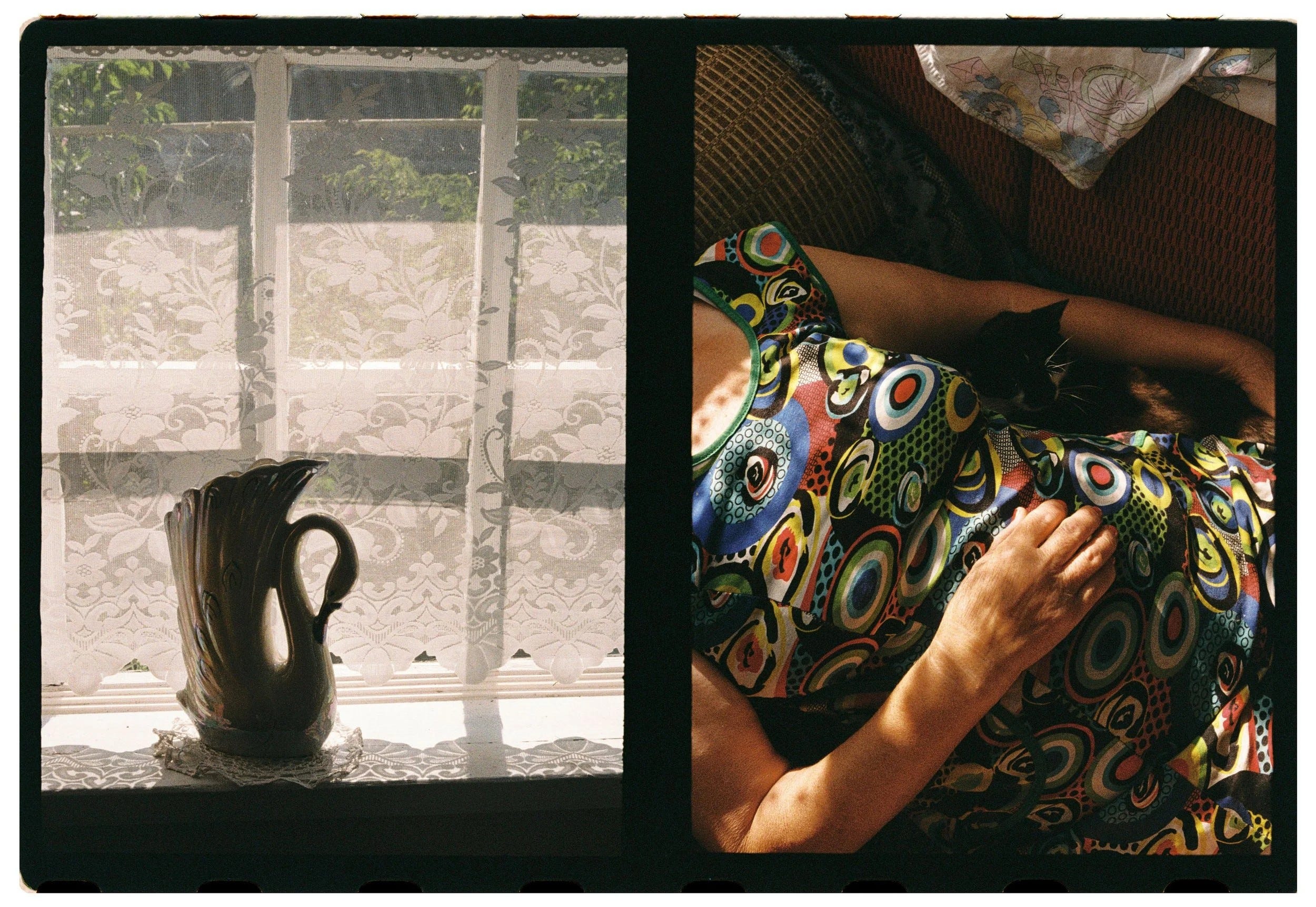
Yes, there was one. These are all diptychs made with half-frame photography, so it is never about a single photo. Each one is a single negative with two images on it that I took one after the other.
This diptych wasn't going to be in the book. It just wasn't that remarkable to me. Then I showed it to Julia Kochetova.
She is a Ukrainian conflict photographer and writer, an incredible person and a friend, and she was one of the first people to see the work. She told me about a Ukrainian folk symbol. It is hard to see, but the photo shows a stork nest on a pole right in front of a house, and there are actually baby storks in it. She told me that in Ukrainian culture this is an incredibly important symbol. If there are birds in the stork nest in front of a house, it means that the house is going to be okay. Of course, I didn't know that. Suddenly the photo took on so much more meaning, and I was able to place it in the sequence where it really shines.
Did you have options for different stories you could tell with these photographs? Were you thinking, "Maybe I could tell this, or maybe I could tell that," or was it set from the beginning?
It was set from the beginning. I didn't look at the photos, see several possible stories and pick one. I decided after I had taken all the photos, of course, based on my own feelings and on what I felt I had seen and wanted to share with the reader. That is how I decided on the core of the story. Then, with that in mind, I look at all the pictures: not this one, yes this one, not this one. For me, setting the framework that the work will exist within is the first thing I do, and it is the hardest. Once that is done, it is very easy to know whether a photo fits inside that framework or not. Then it is just about being honest.
I always recommend that my students come up with a one-sentence description of what their project is about. It can be as simple as "This project is about..." and then finishing that sentence. Once you have that, and if you are honest with yourself, you know which photos belong with it.
In this case, the sentence I focused on was: This is a book about one extended Ukrainian family holding on to whatever ordinary life means during a time of war, a time that is not ordinary. It is simple. One family, regular ordinary life, uncertain circumstances. What do you hold on to? What makes your life feel normal when everything around you is not normal?
About the photographer
Wesley Verhoeve
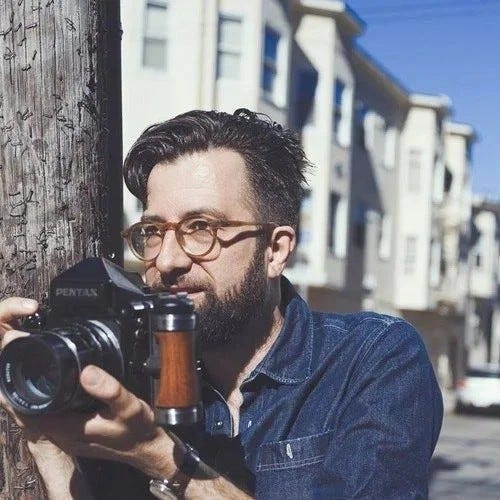
Wesley Verhoeve is a photographer, curator and writer based in Amsterdam, where he moved after twenty years in New York. Before photography he worked in music for more than ten years. His first photography project, One of Many, portrayed about 600 creative people in twelve American cities outside New York and Los Angeles between 2013 and 2015. His work has appeared in The New York Times, National Geographic Traveller, Wired and de Volkskrant. As founding curator of the Projected series at the International Center of Photography in New York, he organised 96 exhibitions featuring more than 300 photographers from 53 countries. He is the author of Notice (2021), Notice Journal, Volume One (2024) and Notice Journal, Volume Two (2026). He also writes Process, a weekly newsletter about photography and creative work.
This is a shortened version of the conversation. Read the full interview with Wesley Verhoeve on About Photography. NOTICE Journal, Volume Two is available from Wesley Verhoeve.