

Justin Mott has photographed Vietnam for about twenty years, from his home in Hanoi. He has completed more than 100 assignments for The New York Times, and his photographs have appeared in National Geographic, TIME, Smithsonian and The Washington Post. He also helps other photographers grow through his teaching. He writes AskMOTT here on Substack and shares his work on Instagram as @askmott.
Photographing rhino caretakers gave him time that assignments rarely allowed.
He arrived in Vietnam in 2006 and soon began receiving regular assignments from The New York Times. In this conversation, he talks about what he learned from the people protecting the last northern white rhinos, and why, on assignment, he works on a different clock.
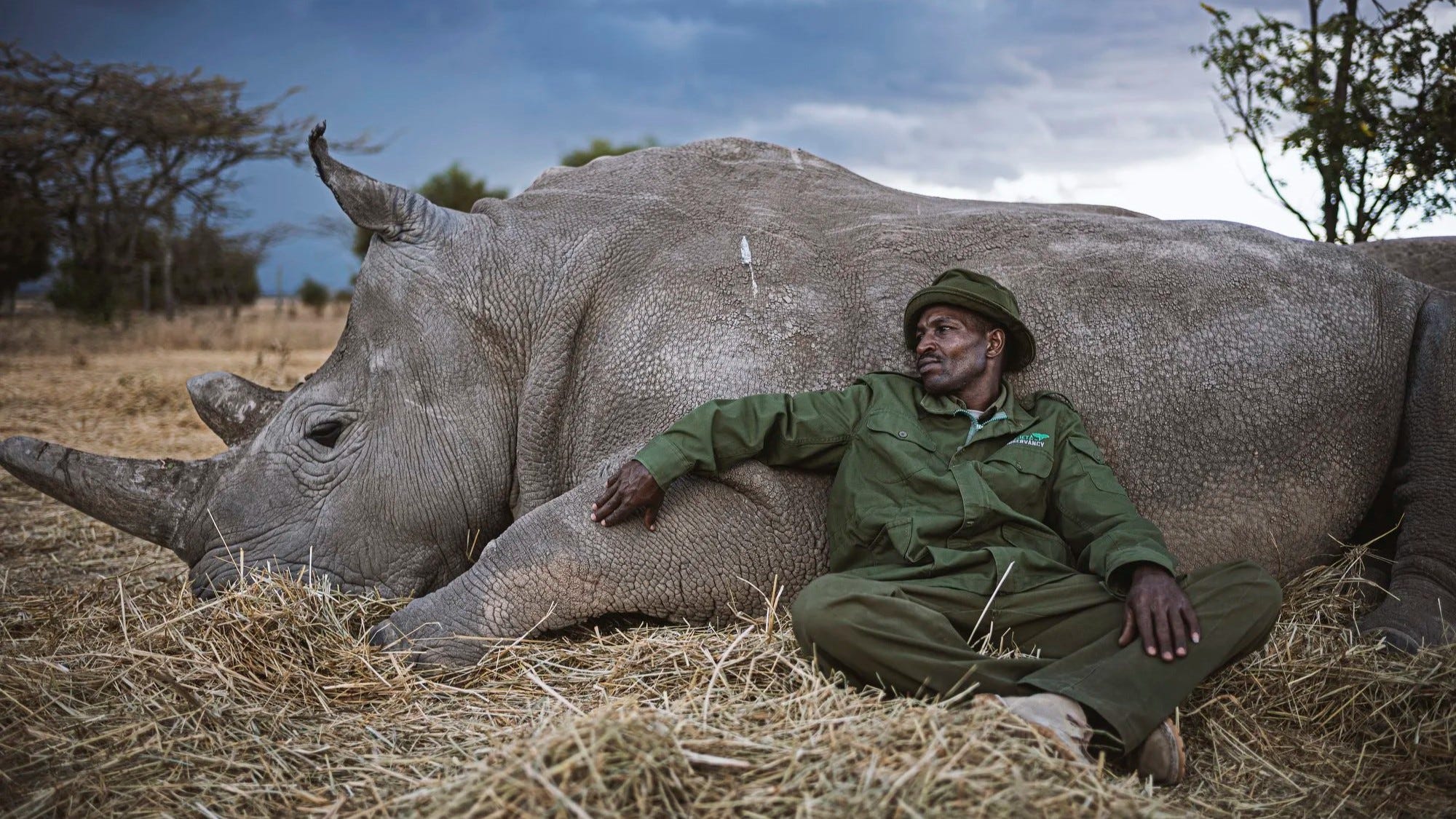
Discovering Instead of Illustrating: With the northern white rhinos, you arrived without knowing exactly what the finished story would be. What did you think you were going to photograph, and what did you eventually realize the story was actually about?
I went there several times, and each time I learned different things. The first time I went, I knew this was part of a bigger, ongoing project I'm working on, which is about people and their relationship with animals. I document people in different countries, and I really try to focus on people who dedicate their lives to helping animals. So I did think it would be about a caretaker and a rhino. I didn't know which caretaker, and I didn't know what it would be about that bond. But I found the caretaker who has been there the longest, and he had this great bond with the two girls. They call them that because they're mother and daughter.
It was less about going in with any preconceived notions and more about saying, I'm going to be here every day, from the earliest they'll let me in until the latest they'll let me stay, and I'll document what I see and grow. I learned that the story is about the bond. I learned there are a lot of boring moments in between, when they're separated, sitting on piles of rhino poop, just hanging out, waiting and watching. I also learned there was a side story about the protectors who patrol the area, so I added that to my story. I didn't know whether I'd have access to that. I knew the rangers were armed and that they protected the area. So the story became multi-dimensional, not just about the caretakers but also about the protectors.
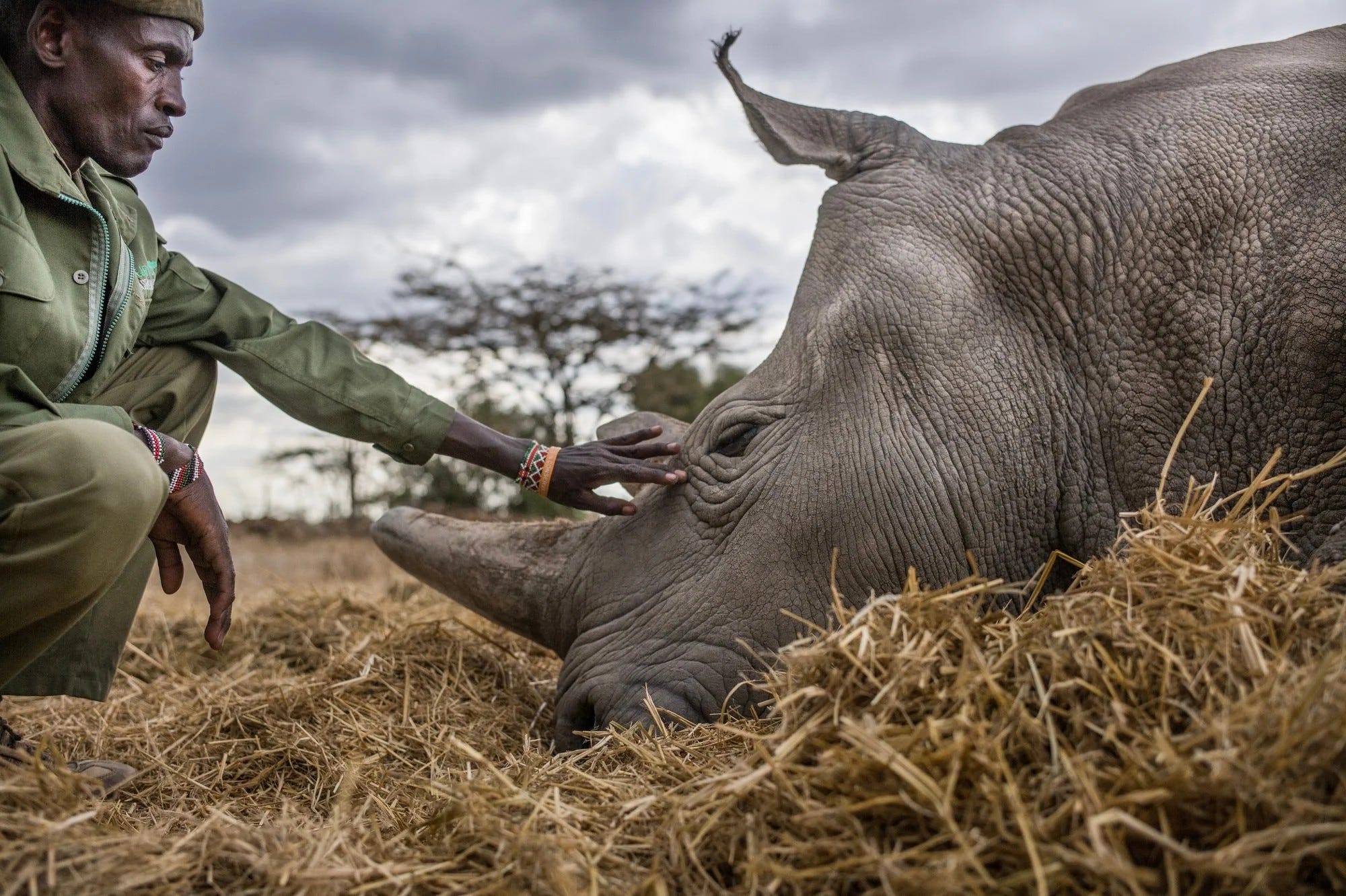
I went out with them at night. That was hard to get access to, because they were worried about my safety. But I was able to write them an email saying, "This email declares that if anything happens to me, I won't sue you. I made this decision." So I went out and learned from the rangers. One guy I met said he had killed several poachers a couple of months before, and he showed me the spot. I learned how dangerous the job was, not just because of poachers but because of the other animals out there too. They're out patrolling at night and risking their lives. I learned a lot about myself, and I learned how a story can go in different directions. I also learned that the story was a lot deeper and had a much bigger impact on me than I thought it would, because I went back two more times.
When Waiting Stops Helping: Documentary photography often depends on waiting, but sometimes time simply runs out. How do you know when to keep waiting for something to happen and when to make a portrait instead?
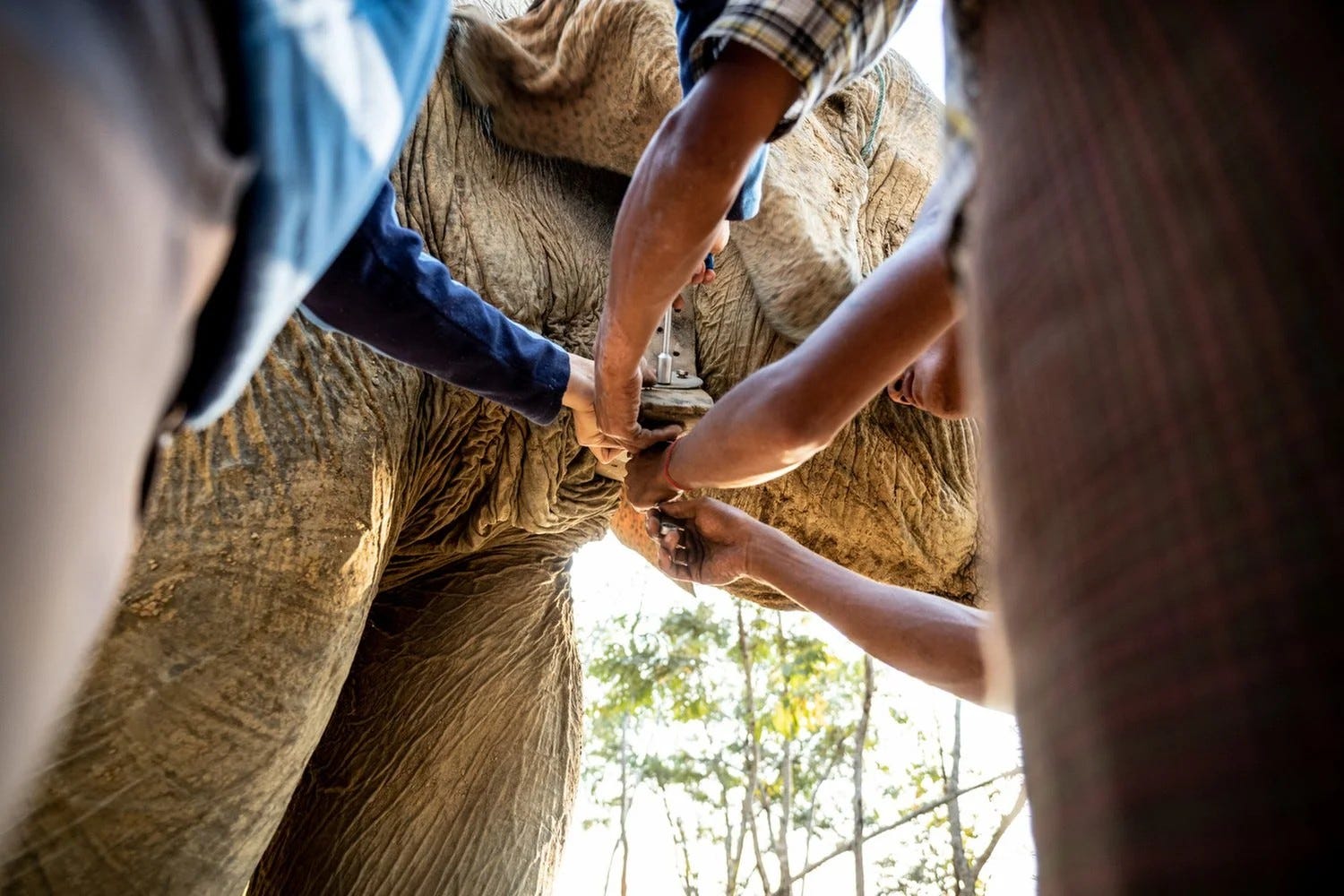
Time management is something you learn quickly on assignments. You get paid per day. Publications didn't have much money back then, and they have less money now, so they want you to get as much done in a day as you can. So when I'm on an assignment, I'm on a different clock than when I'm shooting a personal project. On assignment, the editor makes it clear: you've got to get these shots. Let's say I'm shooting a story for the Smithsonian in Myanmar about the collaring of elephants. They put collars on the elephants to track them and reduce conflict between elephants and humans. I need the action of the collaring, so I know I need to be there at that time. Then maybe there's a sunset shot of the community with the elephants, in good light. But I've only got one sunset, so I have to make a decision. What's the shot I need there? If nothing's working and things aren't happening the way I thought, I always go to a portrait, because I can arrange that and set it up. Or I look for details.
So it's time management. In each situation, you try to sniff out the most visual part. How much time do I need to capture it? And how much time do I need to leave to cover myself for the full story? Sometimes it's a cover story, and you put 90 percent of your time into the cover image, and the editor has made it clear that image is a portrait. Or an editor tells you, "We're not running a portrait here, so don't waste your time on that." Or, "We have room for six images." Back in the day with The New York Times, it was a slideshow, so it might be, "We might run fifteen images as a slideshow, but I also need five images for print."
So you have to budget your time on the fly. You go, you assess, and you work with the time you have. But I'm also a proud photographer, a nervous photographer and hard on myself. There were assignments where I was paid for two days and shot for three, because I wanted to get the story accurate, and also, selfishly, I wanted to look good. I've even had editors say, "Hey, I checked your metadata," and they appreciated it. No editor is going to be mad at you for doing that. I didn't like it, because you should be paid for those days. A lot of the time they didn't have the budget and weren't going to pay you. But as my old professor used to say, "Your name's on it, man, and it's on it forever." So you've got to put your best effort in and do it right, no matter what the assignment is.
About the photographer
Justin Mott
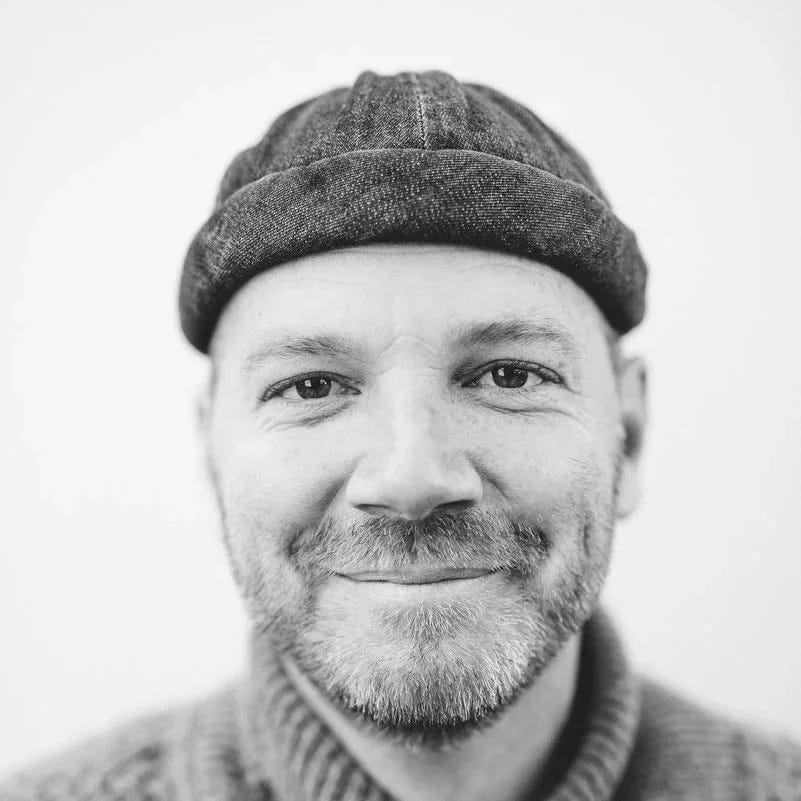
Justin Mott is a photographer based in Hanoi, Vietnam. His work spans documentary projects, editorial assignments, and commercial photography. He has completed more than 100 assignments for The New York Times, and his photographs have appeared in National Geographic, TIME, Smithsonian, and The Washington Post. Together with his wife, Quynh Anh Mott, he co-founded Mott Visuals, a photography and video production studio working across Asia and beyond. He also teaches through AskMott, offering workshops and individual coaching, and spent five seasons hosting and judging the History Channel series Photo Face-Off.
Website · Instagram · Substack · YouTube
This is a shortened version of the conversation. Read the full interview with Justin Mott on About Photography.