

Polly Alderton1 wanted her family photographs to look better.
She was making a record of life with her children. But the photographs she saw on Instagram made her feel ashamed of her own home. Other parents were sharing beautiful things in beautiful homes. She began to aspire to a different picture of family life, with immaculate children in flower fields, wearing little Hunter wellies.
For roughly a year, that idea shaped the photographs she made.
Looking back, she described that part of the family album this way: “the images I was making were so sugary and hid our truth.”
Eventually, she grew tired of that ideal. She began sharing photographs she liked, without concentrating on likes or followers, and she felt she could see her work more clearly as a personal record.
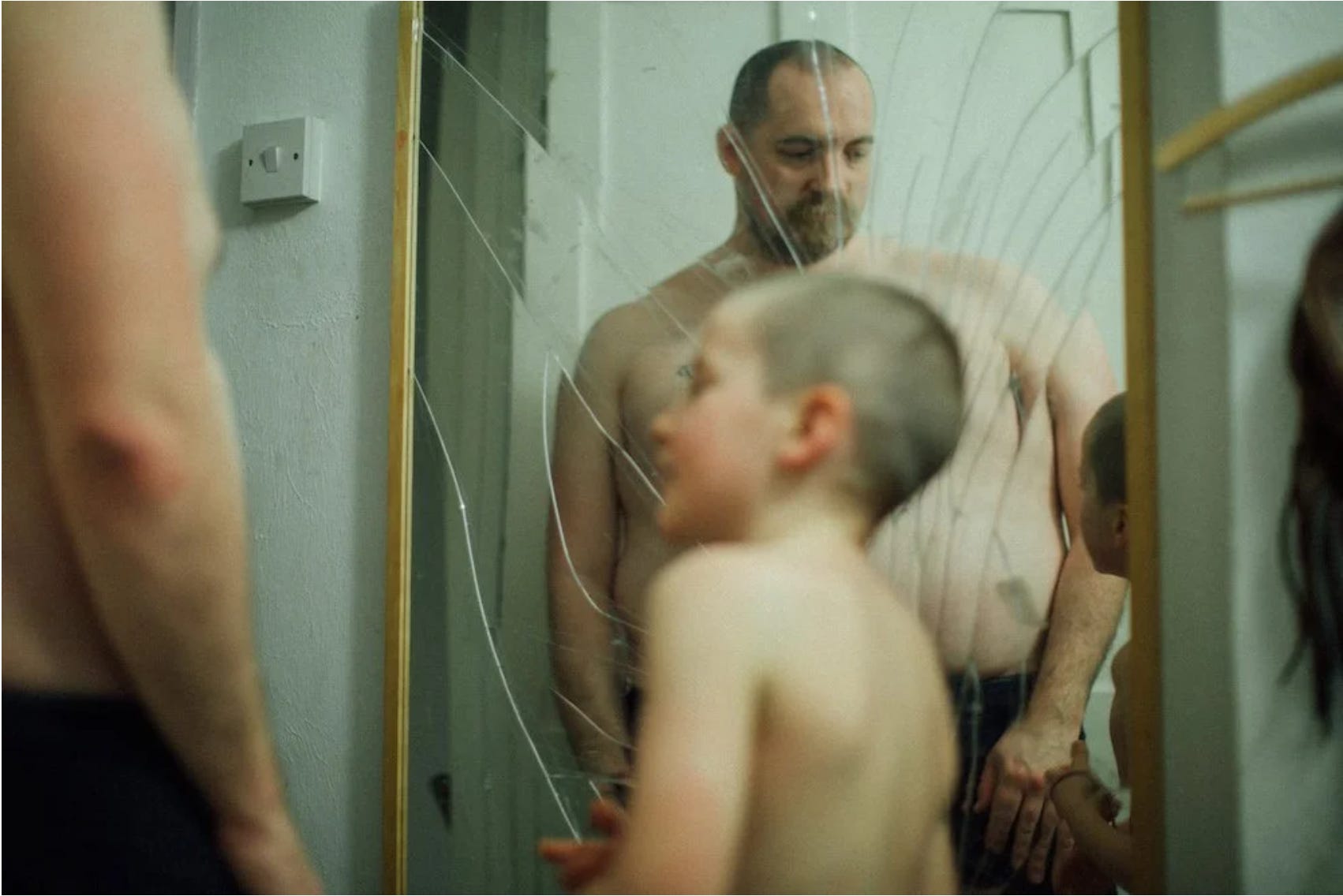
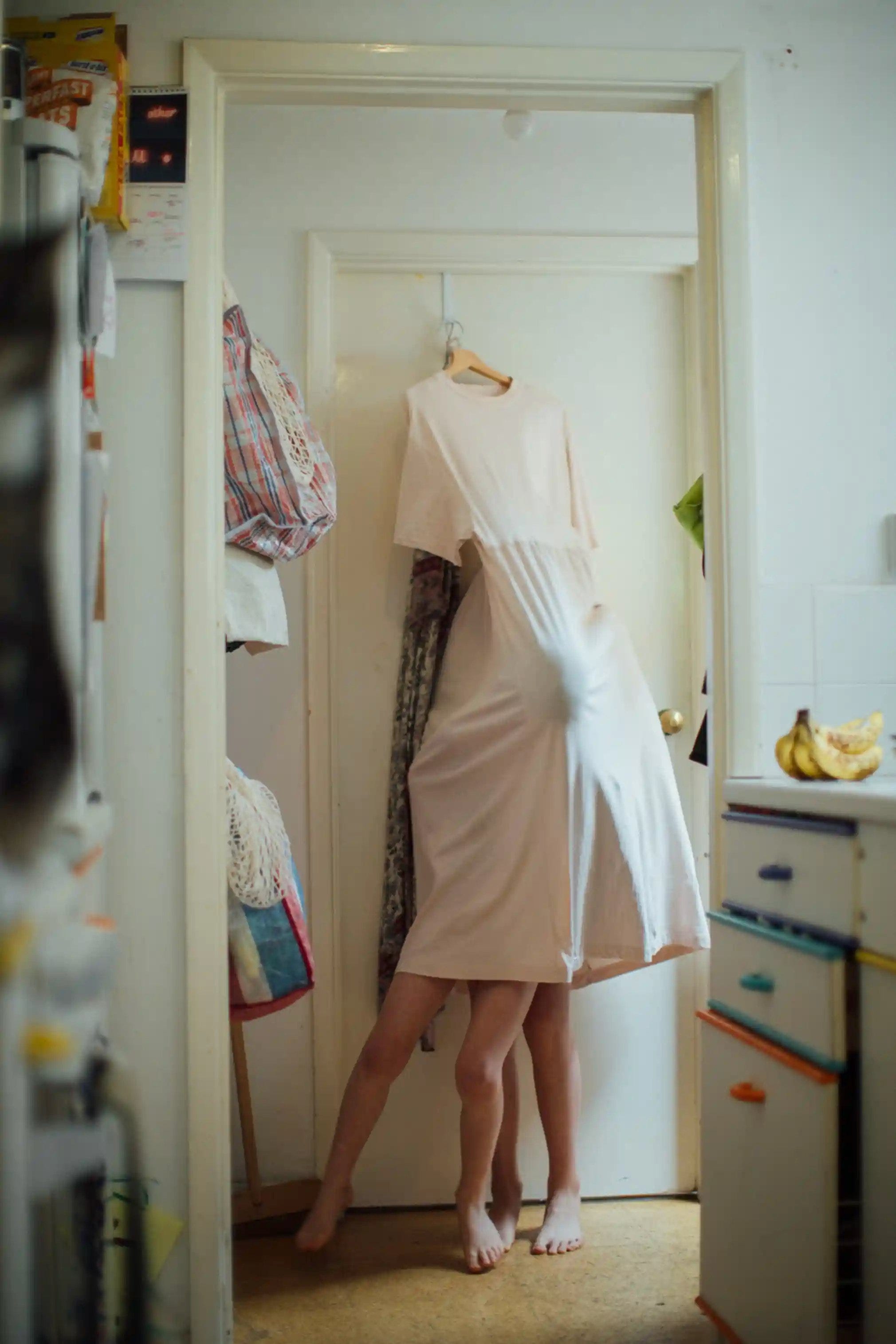
Polly Alderton · The Family Album. A personal record of life with her children. Alderton contrasts an ideal of beautiful homes and immaculate children with the everyday details in family photographs that might later help someone remember what life was actually like.
And that wish for better photographs is pretty reasonable. I mean, there is nothing unusual about seeing a picture, admiring it, and wanting to make something like it. It can give us a reason to pick up the camera.
Polly wanted to record family life, but her idea of a better picture had begun deciding what family life was allowed to look like in the album.
When we go out with a picture in mind, it is easy to treat anything that does not fit as a problem to solve.
An idea does not have to come from Instagram to create this difficulty. It can be a picture we have carried in our head for years, or a description of a project we have become attached to. The hard part is noticing when following that idea makes us leave out the things we actually wanted to photograph in the first place.
That experience makes a clear idea sound risky. Yet an idea can also give a photographer a problem worth working on.
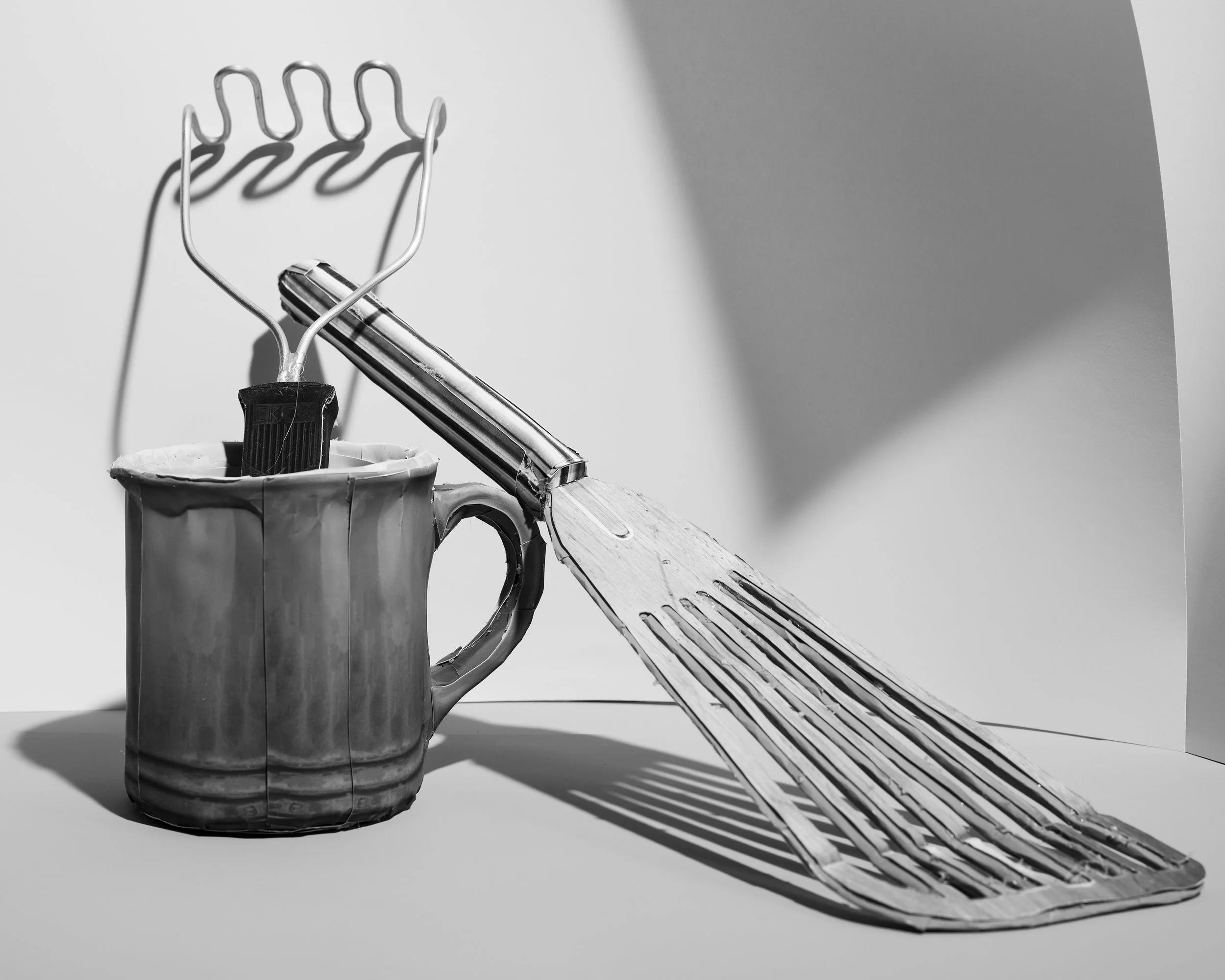
Daniel Gordon2 set himself a quite specific task for Objects at Hand. He chose familiar household objects, such as glasses, bowls, and cutlery, and worked with them on a tabletop in black and white. He avoided objects with strong stories already attached to them, since he wanted ordinary things to appear unfamiliar.
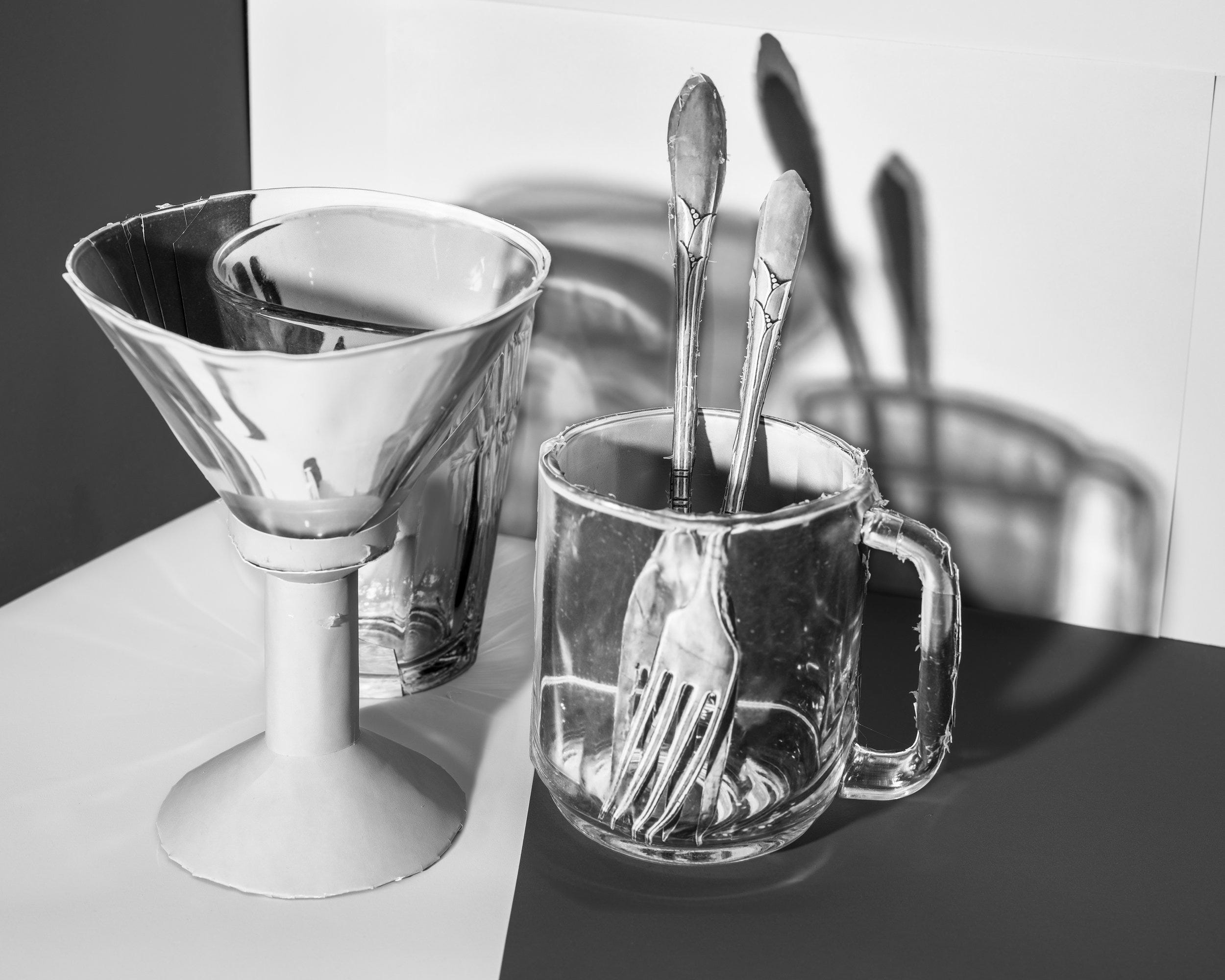
Daniel Gordon · Objects at Hand. Gordon uses ordinary objects from his home and studio in black and white tabletop photographs. Some are paper constructions covered in printed photographic images. Their material form and their appearance from the camera’s viewpoint do not always agree.
In his earlier colour work, Gordon lit objects from both sides to reduce shadows. Here he usually used one light. “The limits were useful because they forced me to look harder,” he says. Now a shadow could carry as much weight in the picture as the object casting it.
Gordon wanted the photograph to make us question what we were looking at. So he made a paper version of a glass and covered it with a printed image of a real one. From his camera’s position, the opaque paper could appear transparent. His idea gave him an effect to pursue. He still had to work out how to create it through the construction, the light, and the camera position.
Alderton’s idea had a different consequence. The look she pursued made her family life appear less like the life she wanted to record. Gordon’s limits helped him make the transformation he was after. Both ideas excluded possibilities, but exclusion alone does not tell us whether either idea is helping.
You can try this without having a project. Spend an afternoon photographing one familiar subject. Instead of looking for something else to photograph, see how the light changes what is in front of you. You know what you’ll photograph, but you can still discover a picture you hadn’t imagined.
This got me thinking. Could a photographer decide much more about a picture in advance and still leave something unresolved?
Gregory Crewdson3 makes staged photographs with a crew, performers, props, and carefully arranged light. He looks for locations before production begins. Once a place suggests a picture, he develops a written description of what will appear in front of the camera. That description guides the practical work needed to make it.
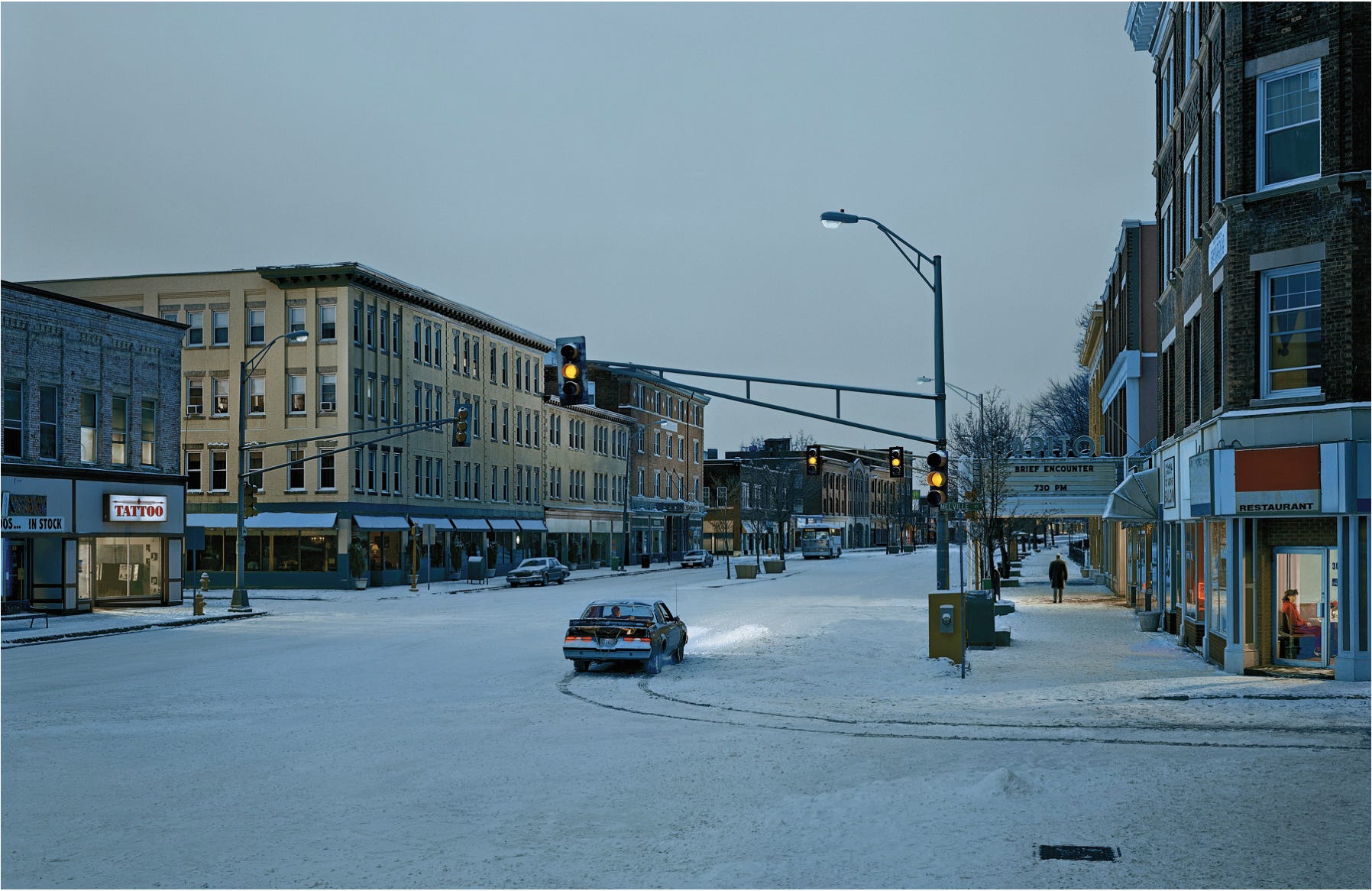
With a crew involved, the description gives other people a way to work towards the same image. A prop car has to be brought in. The lighting has to be arranged. Those decisions make the picture possible before anyone can judge how it feels.
He is also quite clear about what the description leaves out: the characters’ motivations and an explanation of the story.
“I don’t want to know what the answer is. I don’t want resolution. I want mystery.”
His description tells the crew what to put in front of the camera. It does not tell the viewer what has happened to the people there, or why. The careful arrangement is how he makes room for that mystery.
We can go out with no plan and still dismiss a photograph because it does not look like the one we had in mind.
The question is not simply how specific an idea is. It is what the idea has already decided.
It gets harder when a photograph we did not plan could express what matters to us better than the one we actually planned. Do we keep trying to make the original picture, or change the plan?
