

A good photograph creates a strange problem.
When something does not work, it is easy to move on. But when a photograph does work, there is a reason to return to it. The same subject, the same place, the same kind of light. Perhaps simply another photograph that feels like the first.
The thing is that success does not directly tell us what was worth returning to.
Sandra Cattaneo Adorno1 encountered this through a photograph she made in Santa Monica. She was photographing around the pier when reflections began to break the scene into overlapping pieces of reality. Looking at the photograph later, she realized there was something in the reflection that went beyond the visual effect. It made the ordinary world in front of her feel less certain.
“Since I took this image, I started looking out for them,” she later said.
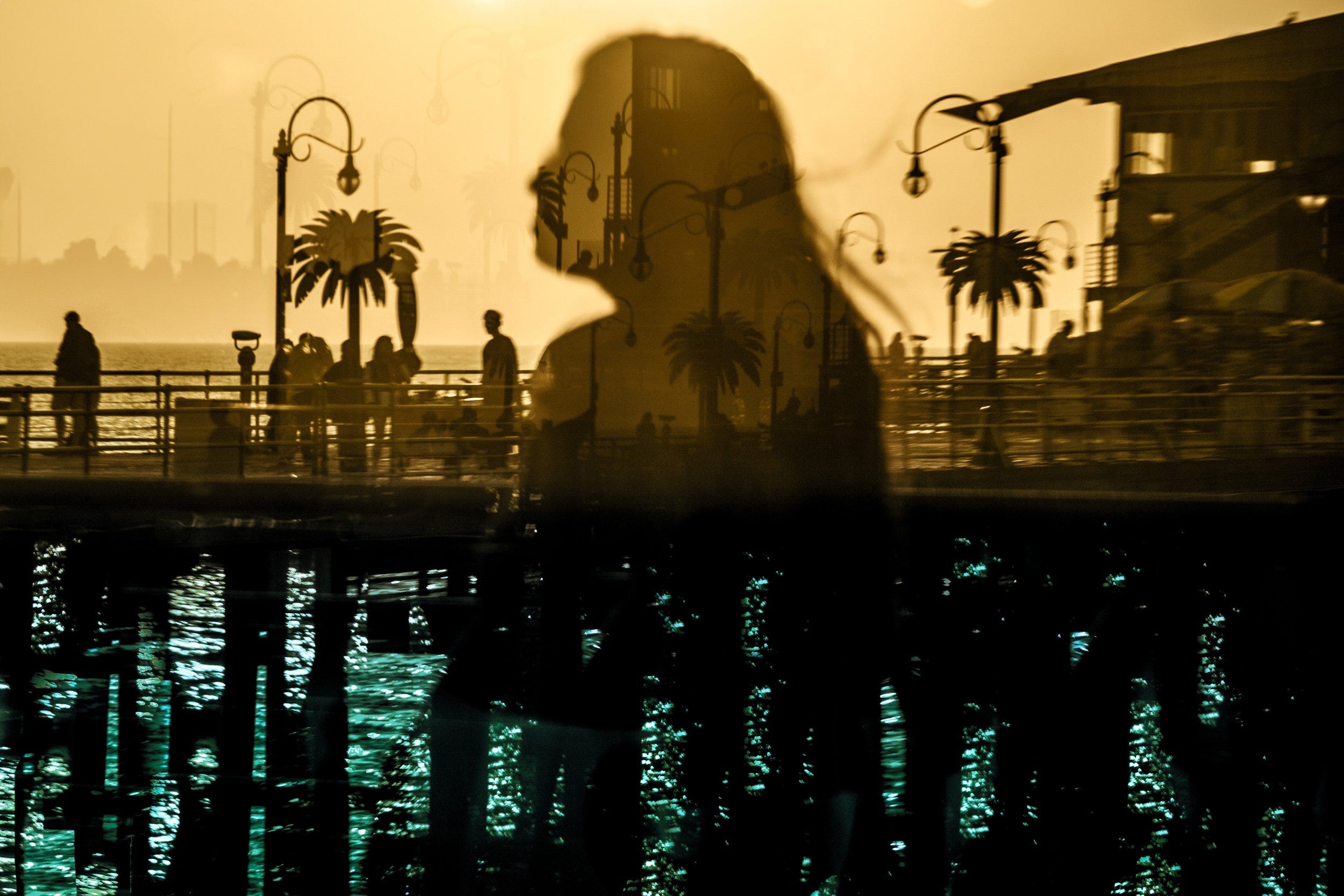
Photography had begun as a hobby for Cattaneo Adorno. She had only started seriously taking pictures in her sixties, after attending a workshop with Alex2 and Rebecca Webb3.
The Santa Monica photograph gave that attention a direction. She began noticing reflections elsewhere and what had appeared unexpectedly in one photograph became something she could return to, question and develop. Over time, that way of looking became part of a much larger body of work.
This suggests one possible answer to what comes after a good photograph:
To understand what made the photograph worth returning to.
Not simply how the photograph looks, but what made it interesting enough to return to. Sometimes a photograph reveals a subject, sometimes a relationship. A particular limitation, a question, or simply a way of looking that had not been obvious before.
But there is a problem with that answer. It is not always clear what exactly has been found.
Danielle L. Goldstein4 had been photographing for only about a year when she made a self-portrait in a hotel room in Seville. She placed her camera on an available ledge and made a ghost-like image of herself in the temporary room. There was no larger project behind it.
“I sensed that the concept was interesting, but in its very nascent form I wasn’t quite sure why.”
She made another one anyway.
Goldstein began photographing herself in hotel rooms whenever she travelled. The basic condition remained remarkably simple: a temporary room and her own presence inside it. She continued for fourteen years.
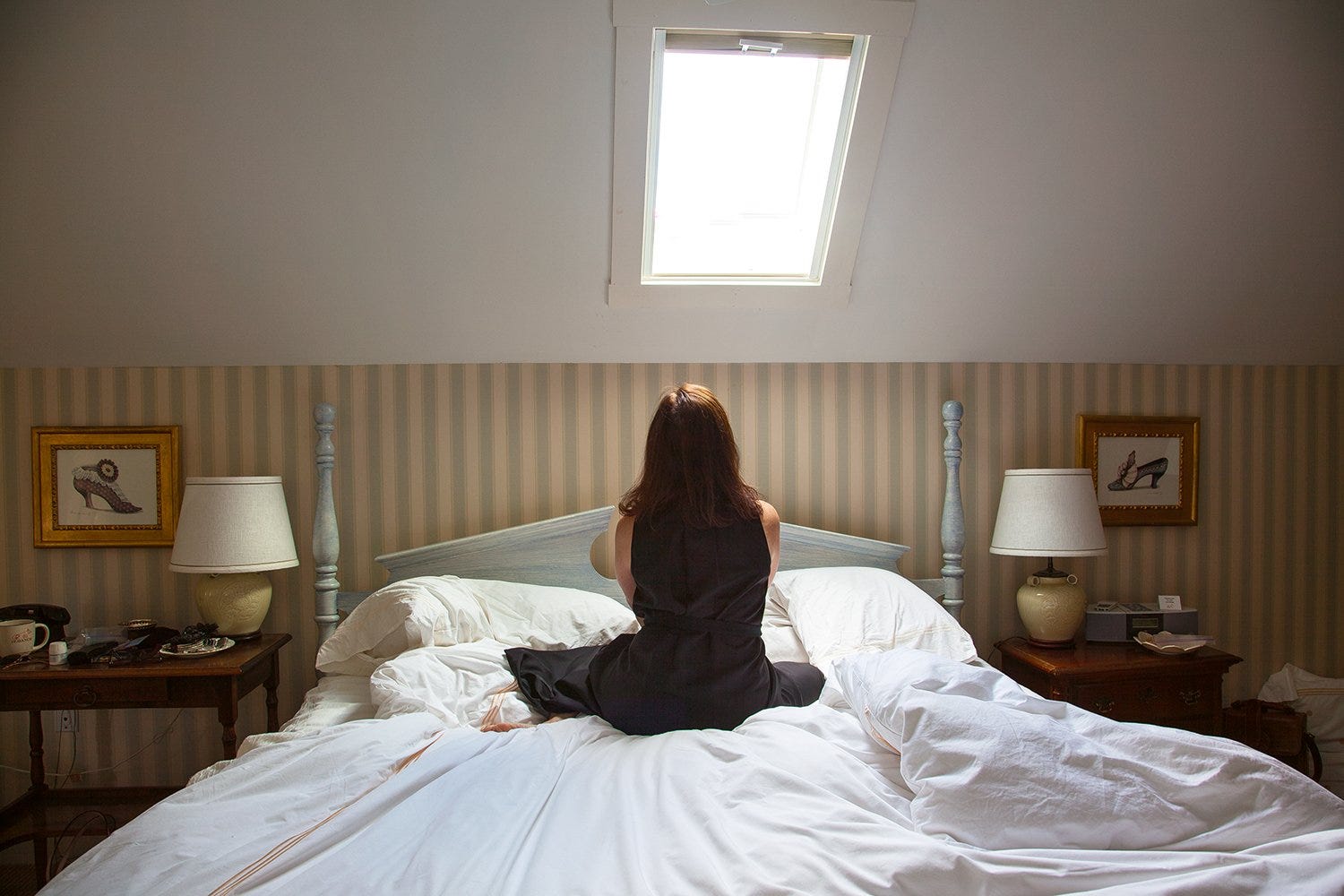
Only gradually did the photographs begin to tell her what the work was about. What started with the anonymity of hotel rooms became more personal. Her marriage ended. Her circumstances changed. Other people entered the photographs. Rules she had established for herself loosened.
When she eventually looked back at the work as a whole, the pictures had become something she could not have fully described when she made that first photograph in Seville.
“Clarity often comes after the fact,” she said.
When I think about it, this means that the answer does not have to come first.
If it is not clear what made the first photograph interesting, making another can be a way of finding out. Not by trying to recreate the first photograph exactly, but by repeating part of what produced it and seeing what happens when the rest changes.
Goldstein returned to the same basic idea: herself, a temporary room and a camera. But each time, the room was different. Then her own life began to change too. Photo after photo, what had begun as an experiment in Seville became something she could understand more clearly.
The next photograph does not have to prove that the first one was good. It can help explain why it mattered. But understanding that something matters still does not tell you how to turn it into something larger.
So how do a few interesting photographs become something you can keep building on?
