

When several photographs show things that really happened, how do you decide which one should represent the whole?
Pete Souza1 had one decision to make when he entered a small conference room in the White House Situation Room: which side should he stand on?
The room was so crowded that once he chose his position, he knew he would not be able to move. People were standing shoulder to shoulder. Barack Obama and members of his national security team were watching the U.S. operation against Osama bin Laden unfold.
Souza chose one side of the room and stayed there for about 40 minutes. During that time, he made around 100 photographs.
That may sound like a lot, but for Souza it wasn’t. The difficult decision came the following day.
Souza asked whether photographs from the previous day should be made public. He and one of the photo editors eventually selected around seven. Only one showed what happened inside that room during the raid.
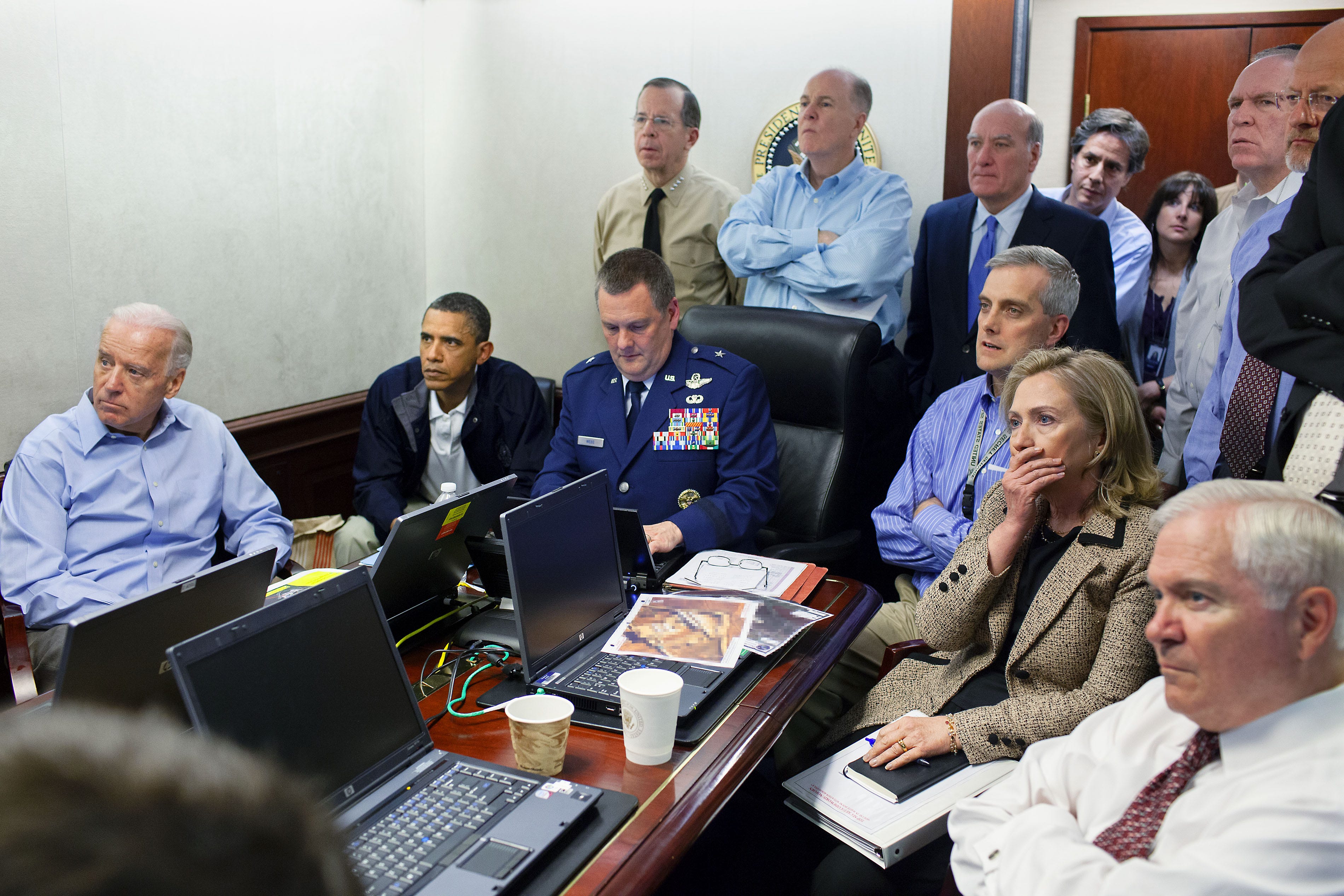
It is the photograph most of us now know. Obama sits near the corner of the room, leaning forward. Hillary Clinton is on the other side of the table with her hand over her mouth. Around them, almost everyone is looking in the same direction.
Souza still has little doubt about the choice.
“I’m convinced to this day that we picked the best one,” he told me when we recently spoke about the photograph.
For him, the reason was simple. Of the photographs he made during those 40 minutes, this was the one that best showed the tension in the room.
But after it was released, something else in the photograph began attracting attention: Clinton’s hand.
Souza remembers cable television discussing why she had her hand over her mouth. She was one of only two women in the room, and some of the discussion focused on why she appeared to react this way when the men did not.
Souza had not expected that. And there was something the people having those discussions could not see.
Among the other photographs Souza made during those 40 minutes are photographs in which the Defense Secretary has his hand up to his mouth. There are others where Joe Biden does the same.
Those photographs were not part of the public release from inside the room.
The photograph everyone saw was real. Clinton really had her hand over her mouth at that moment, and Souza had selected the photograph for a reason he still believes was right. It showed what everybody in the room was feeling.
Yet viewers focused on Clinton’s gesture without knowing that other people in the room had made a similar gesture in other photographs.
That is what makes the choice interesting.
Souza knew what was in the other frames. Most viewers didn’t. This difference exists whenever photographs are edited. A photographer may have hundreds or thousands of images to work with, while the people who eventually see the work usually have access only to the ones that survive.
Showing every photograph would not solve the problem. More photographs do not automatically produce a more accurate understanding, and every book, exhibition or article requires some kind of reduction.
But reduction does something. It gives certain moments more space than others.
The Situation Room photograph did not become more authentic when Souza selected it. But it became the photograph that millions of people would use to see those 40 minutes.
There are therefore two slightly different questions hiding inside the same decision: what does this photograph show, and what are we asking it to represent?
For Souza, the photograph showed the tension in the room exceptionally well, but the discussion around Clinton’s gesture shows why the second question can be harder.
This was actually not the only time Souza had to think about that difference.
He described another situation involving photographs of Obama. Souza had made many photographs, but eventually considered three frames from the same moment. All of them were authentic, but Obama’s expression was slightly different in each one.2
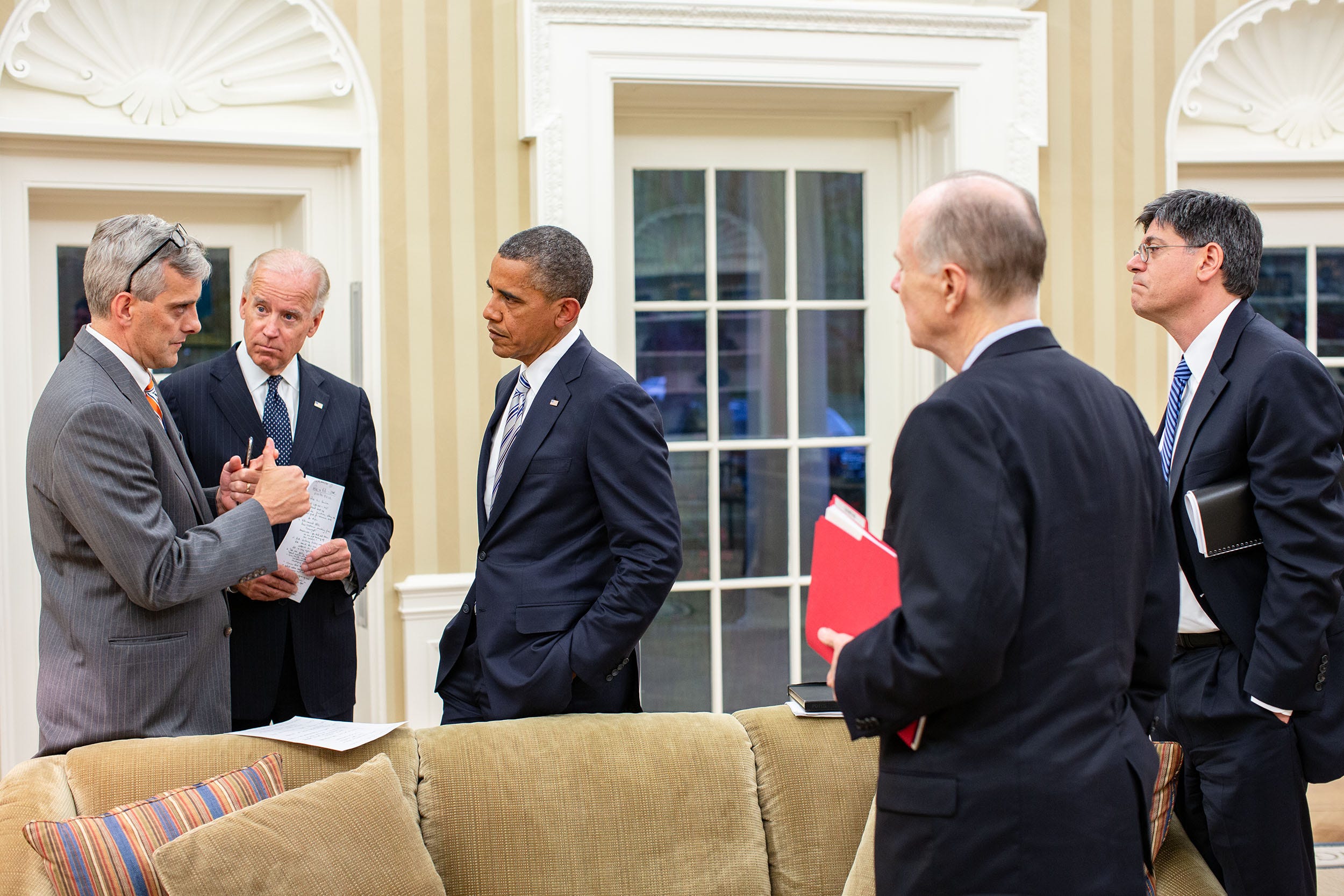
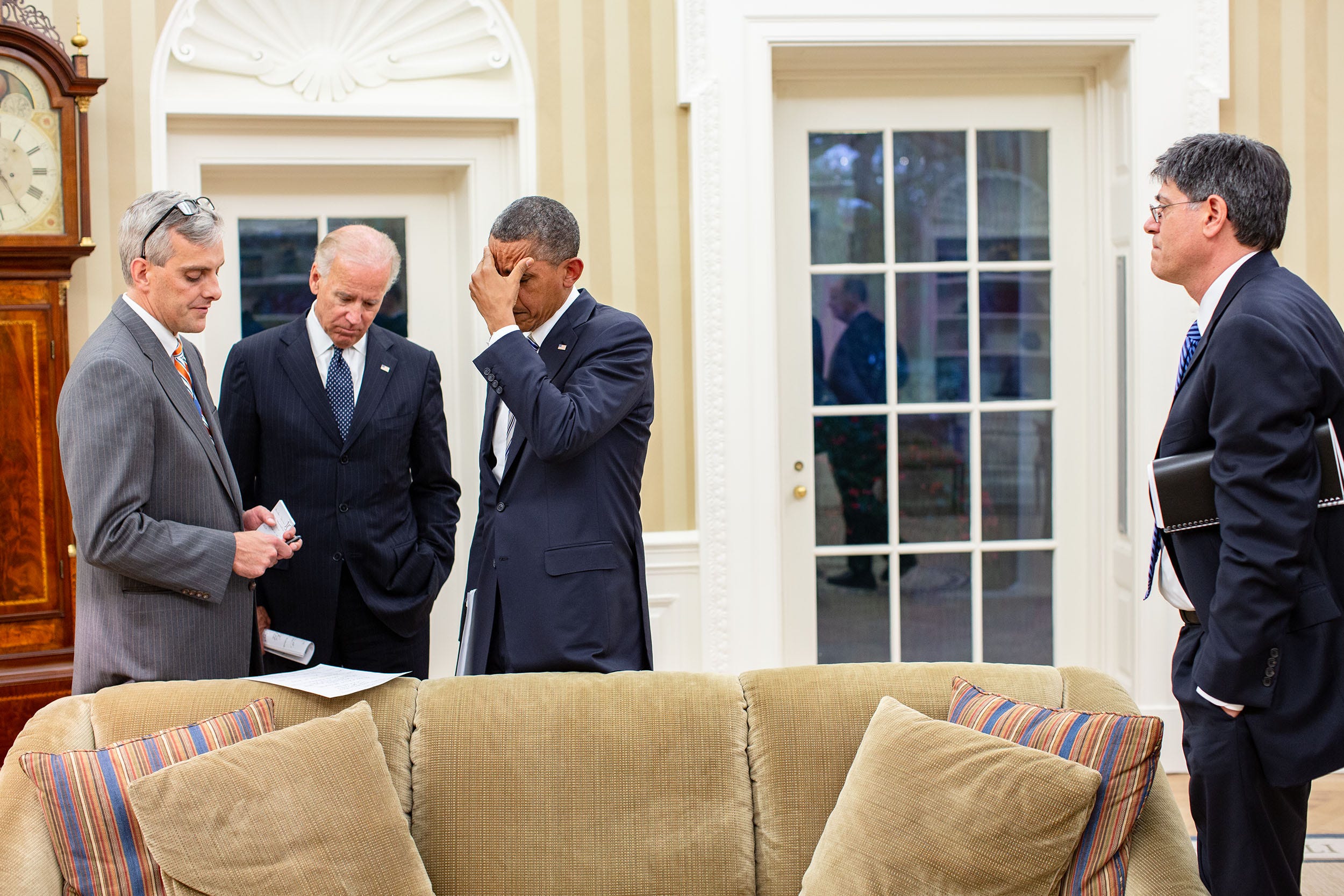
These photographs were made on September 11, 2012, a day when Obama visited the Pentagon and families affected by 9/11, Section 60 at Arlington National Cemetery, and wounded soldiers at Walter Reed Hospital. Souza later clarified to me that he made many photographs of this particular moment, estimating around 35–40 frames, and considered three for selection. Two of those three were eventually made public. The remaining frames are in the National Archives but are not yet in the public domain.
Choosing between them mattered because each could lead to a different interpretation of the same moment.
The problem was not finding the photograph in which Obama looked “right.” Each photograph showed something that had actually happened. The problem was deciding which of those authentic moments would be the one other people saw.
Several photographs can all be authentic without being interchangeable.
But the photographs left outside the edit are only part of the problem, because viewers also bring with them photographs they have seen before.
Benjamin Rasmussen3 spent eight years working on The Good Citizen, a project about what it means to be American. As he photographed across the United States, he became increasingly interested in the visual language already attached to the subjects in front of him.
Rasmussen describes part of this as cultural memory.
“People remember the stories they’ve already seen,” he told me. “You don’t have to repeat them.”
He encountered this problem while photographing along the U.S.-Mexico border. Journalists could visit a morgue in Arizona and photograph the bodies of people recovered from the Sonoran Desert. Rasmussen had a problem with that approach. He felt the story had already been told repeatedly and that showing a partially mummified body could reduce someone who had a family, a past and hopes for the future to what happened to their body.
He and a friend spent several days in the desert and at the morgue looking for another way to photograph the story. They eventually focused on black water jugs left behind by people crossing the desert. Rasmussen saw them as metaphors for what the landscape does to the human body.
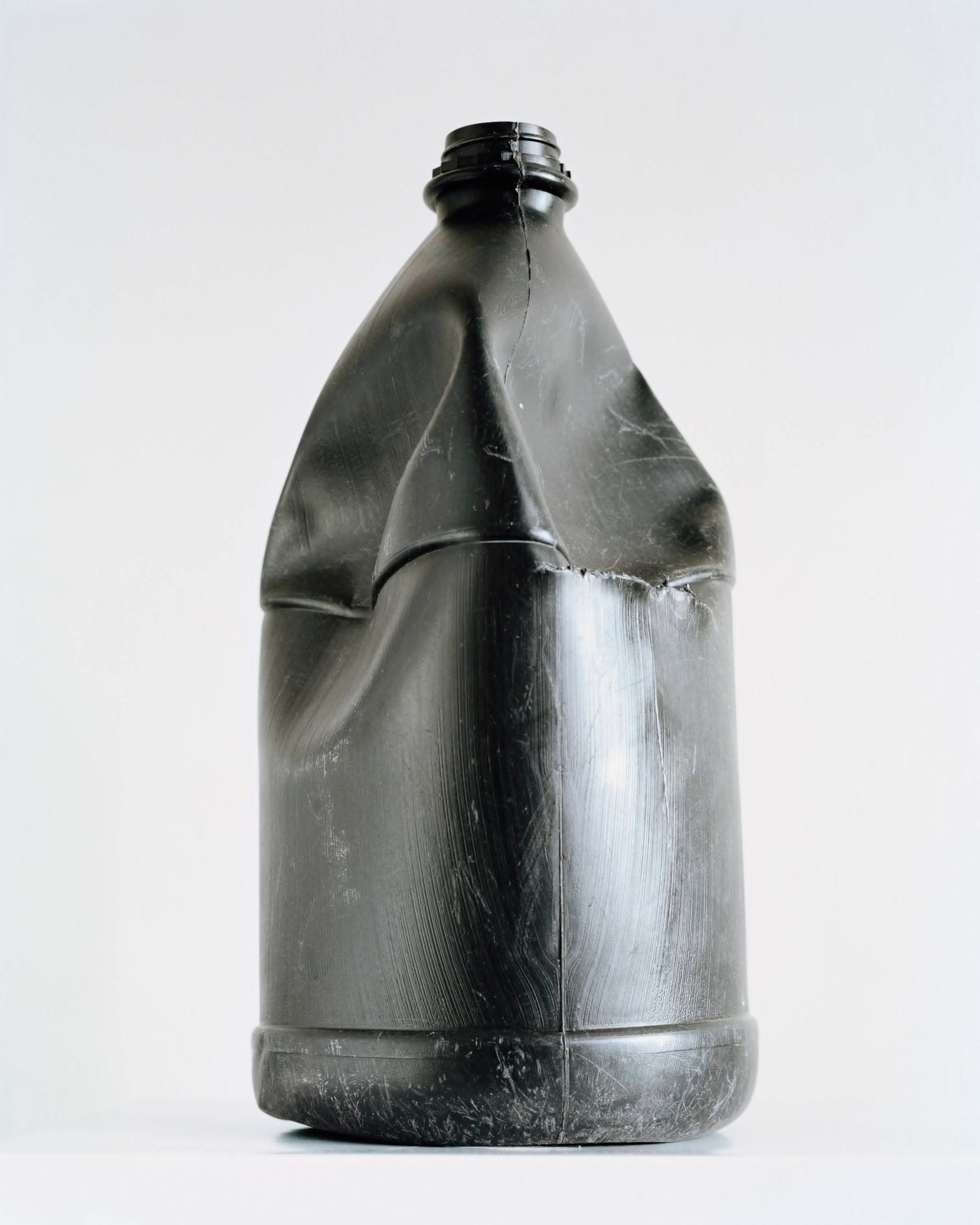
The more direct photographs would still have shown something real. Rasmussen’s concern was that another photograph of a dead body would repeat a way of showing migrants that viewers had already seen many times before.
Rasmussen describes this as a visual language. Certain kinds of people are often photographed in similar ways. Powerful people tend to be shown one way, while people living in poverty, refugees, migrants or victims of war tend to be shown another. After seeing these kinds of photographs again and again, viewers begin to recognise them and associate them with particular subjects.
Souza could look at the photographs around his Situation Room image and know what else happened during those 40 minutes. Rasmussen was thinking about photographs that were not his at all. They were already in the viewer’s memory.
This means that viewers do not look at each photograph as if it were the first photograph they had ever seen of that subject. They compare it, consciously or not, with images they already know.
If people have repeatedly seen migrants photographed through moments of crisis, for example, another photograph of a real moment of crisis does not arrive on its own. It becomes one more photograph that can fit into an idea of migrants the viewer already knows.
That does not mean Rasmussen believes photographers should avoid familiar or dramatic photographs simply because they have been made before.
The question is whether that particular moment deserves the amount of attention the photographer is about to give it.
Sometimes it will.
An exceptional moment may be important precisely because it is exceptional. The most dramatic photograph may also be the photograph that needs to be seen.
So the answer is not to replace expected photographs with unexpected ones, or dramatic photographs with quieter ones. Rasmussen’s approach is more useful than that. He tries to recognise the visual language a photograph already belongs to, what viewers may already associate with it, and then decide whether he wants his photograph to add to that representation.

The problem becomes harder when we select one moment and the viewer has little else to compare it with.
That photograph may then start to stand not only for the moment it shows, but for a person, a place, an event or even an entire project. The more we ask it to represent, the more important it becomes to consider what that particular moment includes and what it leaves out.
This requires a different kind of judgement. A photograph can be strong and show something that genuinely happened. But we still have to decide whether we want that particular moment to become the one through which the larger subject is understood.
When looking through an edit, I think there is another question worth keeping beside those:
What am I asking this photograph to stand for?
The answer may still be the most dramatic photograph. It may still be the photograph everyone would expect. And it may still be the photograph that immediately looked like the best one.
Pete Souza looked through roughly 100 photographs from the Situation Room and reached exactly that conclusion.
“When you look through the pictures, it’s like, that’s the one,” he told me.
More than fifteen years later, Souza still believes they made the right choice.
What happened afterwards does not mean he should have chosen another photograph. Souza knew the other frames and knew that Clinton was not the only person who made that gesture. Most viewers did not.
They had one photograph.
For millions of people, that photograph became the image through which those 40 minutes were understood.
Most of us will never make a selection with consequences like this one. But every time we edit our photographs, we make a smaller version of the same decision. We may have hundreds of photographs to choose from, while the viewer will only see the ones we select.
The question is not whether one photograph can represent everything. It cannot. We can instead look at what the photograph shows, what we know from the photographs around it, and what the viewer already associates with an image like this.
Then we can ask whether this is the moment we want to give that much space to.
The answer can still be yes. Souza knew what was in the other frames and still chose the Situation Room photograph. Considering these things does not always lead us to another photograph.
It can lead us to the same photograph, but with a clearer understanding of what we are asking it to represent.
Martin
Pete Souza, from the Situation Room, tells the story behind a photograph taken during the raid on Osama bin Laden’s compound. He describes photographing the raid from a single position for about 40 minutes, capturing around 100 photographs. He then selects one from the raid itself for public release and discusses the subsequent discussion about Hillary Clinton’s gesture.
Pete Souza, Obama: An Intimate Portrait - My interview with Pete Souza about eight years photographing Barack Obama, including the difficulty of choosing between several authentic photographs of the same moment after the Benghazi attack and how different selections could lead to different interpretations.
Benjamin Rasmussen, The Good Citizen - My interview with Benjamin Rasmussen about The Good Citizen, cultural memory, familiar visual languages, and his decision to photograph black water jugs and personal objects rather than repeat direct images of bodies recovered from the Sonoran Desert.
The photo is a carefully staged “re-creation” made a few days after the infamous attack…….without sickening comments by the sickening Hillary.
This is a thoughtful write-up on choice and its impact on history. Excellent.
I hope you don’t mind me raising what may seem a little trivial to some: I remember seeing that situation room image for the first time and what instantly caught my attention was the cups: I wondered, if I had those responsibilities, and were called into that room to watch attack, risk, death, whether I’d have stopped to consider if that wouldn’t all be better with a nice cup of coffee (or whatever)?