

Hello Fellow Photographers,
It's Martin from About Photography with another Wednesday Photography Quiz, a free weekly email from Photography, Reconsidered.
Every Wednesday you get five photographs to guess and the full story behind one of them. You can read it all here, in the email. Your Friday issue stays the same.
Five photographs of movement this week, from a racing car to a sea full of rays. Can you name the photographers?
In this email:
The quiz: five photographs of movement, vote for one name under each
Hints, if you get stuck
The answers
The full story behind photo 3: a racing car, a stretched wheel and a caption that may be wrong
From Friday's issue
Tap a name under each photo to vote. You will see what other readers chose. No prizes, just for fun.
Stuck? Hints
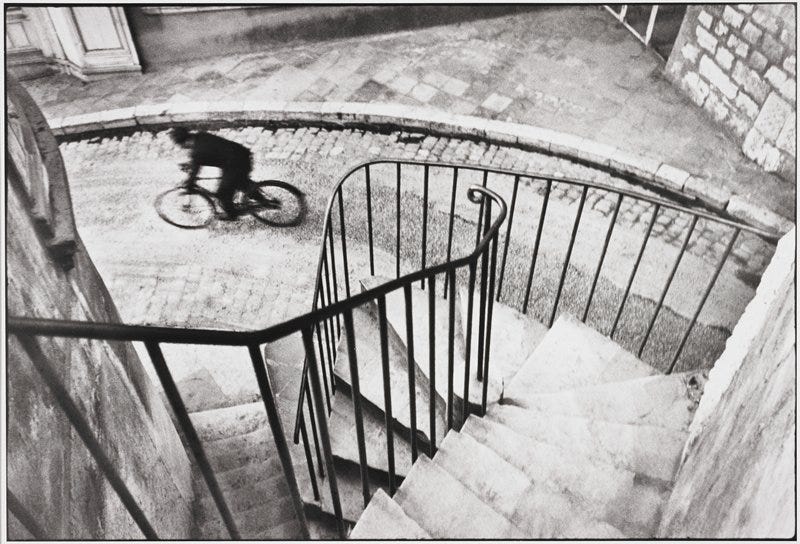
1. In 1943 he escaped from a German prison camp. It was his third try.
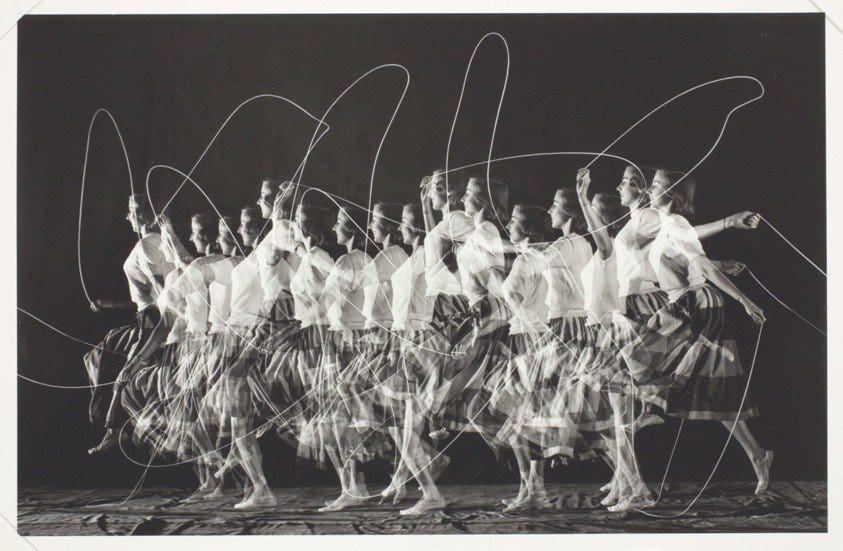
2. He was an engineer, not a photographer by training. As a student he worked for a power company and climbed poles during storms.
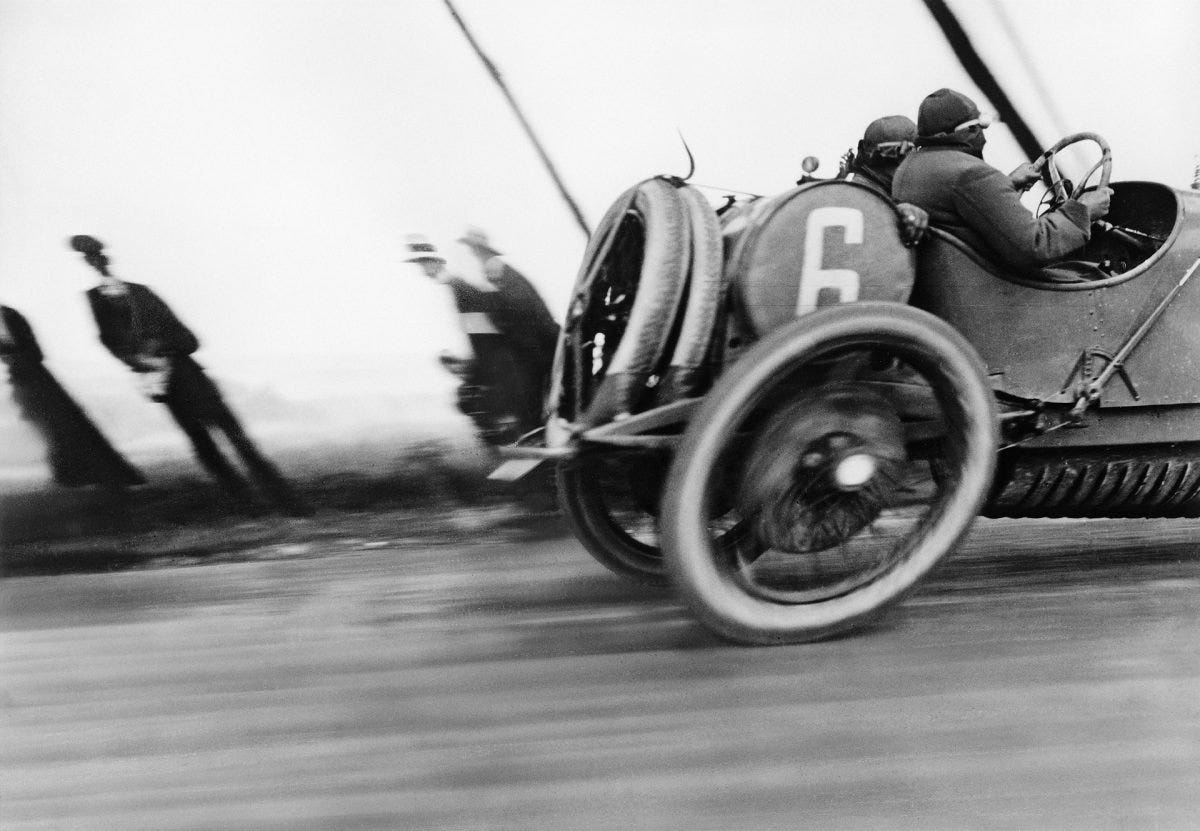
3. All his life he kept a diary and glued his prints into large albums. The French State now holds 126 of them.
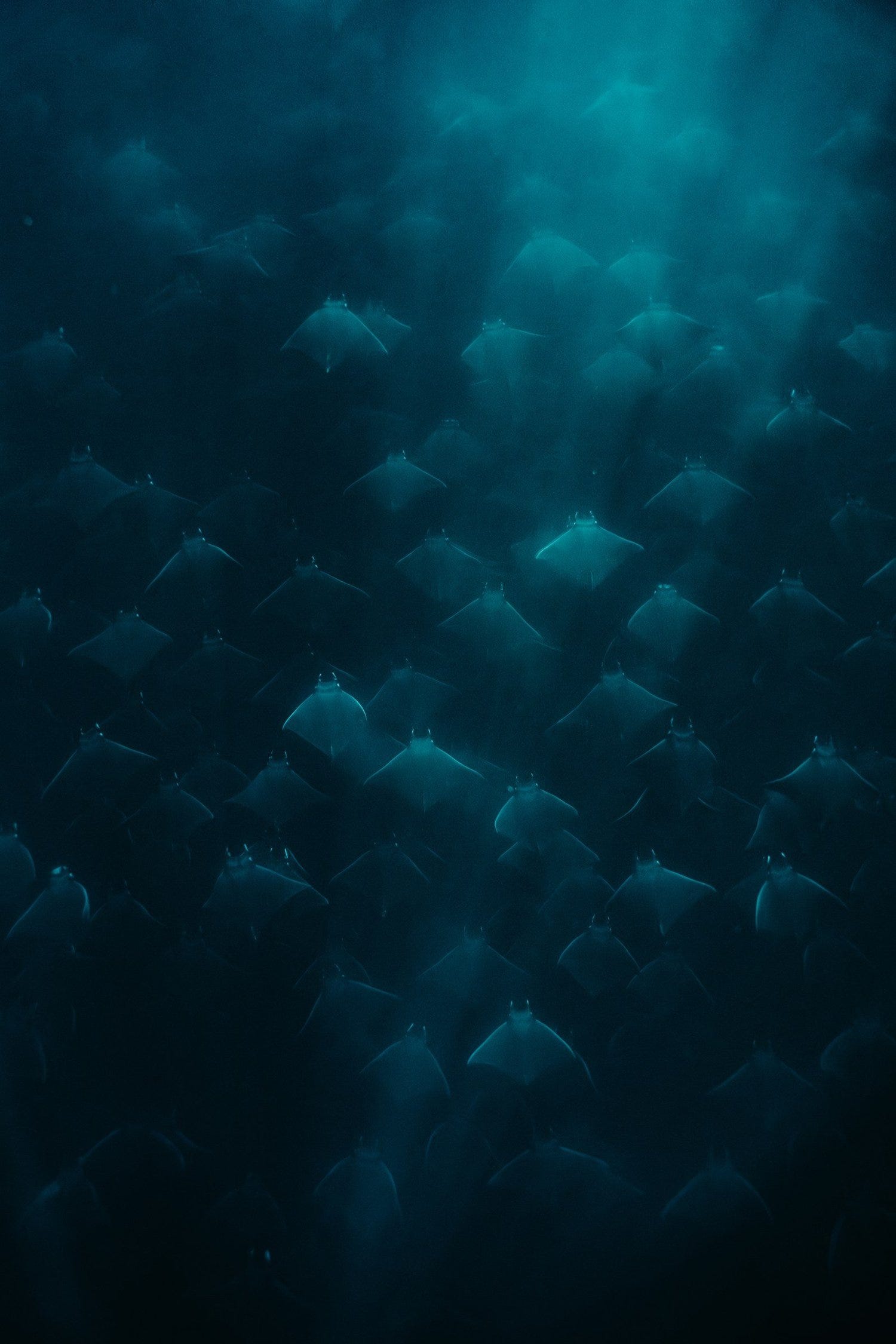
4. She is a biologist first. She started out in a neuroscience lab in Brazil.
5. In 1940 Albert Einstein helped him get an emergency visa to the United States.
Voted? Here are the answers
1. Henri Cartier-Bresson. Hyères, France, 1932.
While he was a prisoner, the Museum of Modern Art in New York thought he had died. It began to plan a "posthumous" exhibition of his work.
2. Harold Edgerton. Moving Skip Rope, 1952.
He made this picture with many flashes on one frame. So one movement shows up again and again in a single photograph.
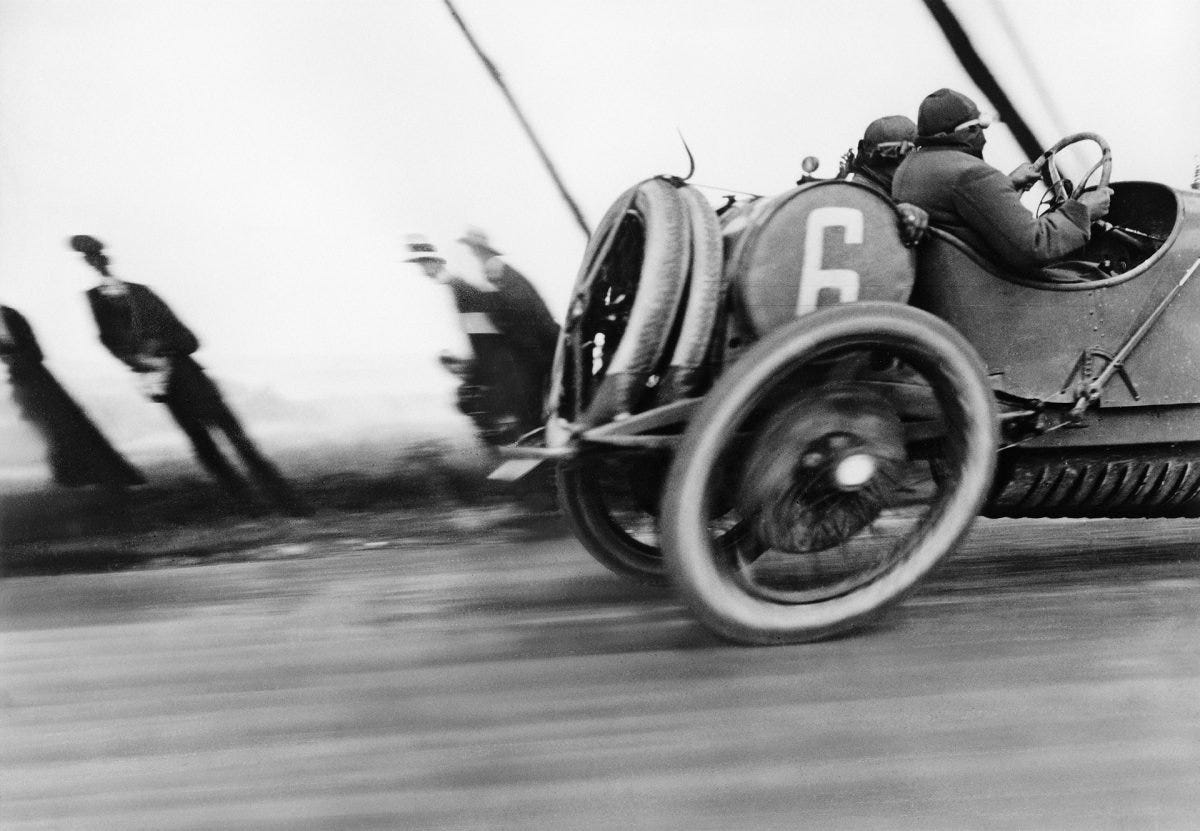
3. Jacques Henri Lartigue. Grand Prix of the Automobile Club of France, 1912.
He did not like the picture at first. He found it blurry, cropped and distorted. The full story of the picture is at the end of this email.
4. Maya Santoro. Mobula rays, Baja California, Mexico.
She swam down about 15 metres, and the rays were still below her. To freeze them she needed at least 1/1000 of a second. Read our interview.
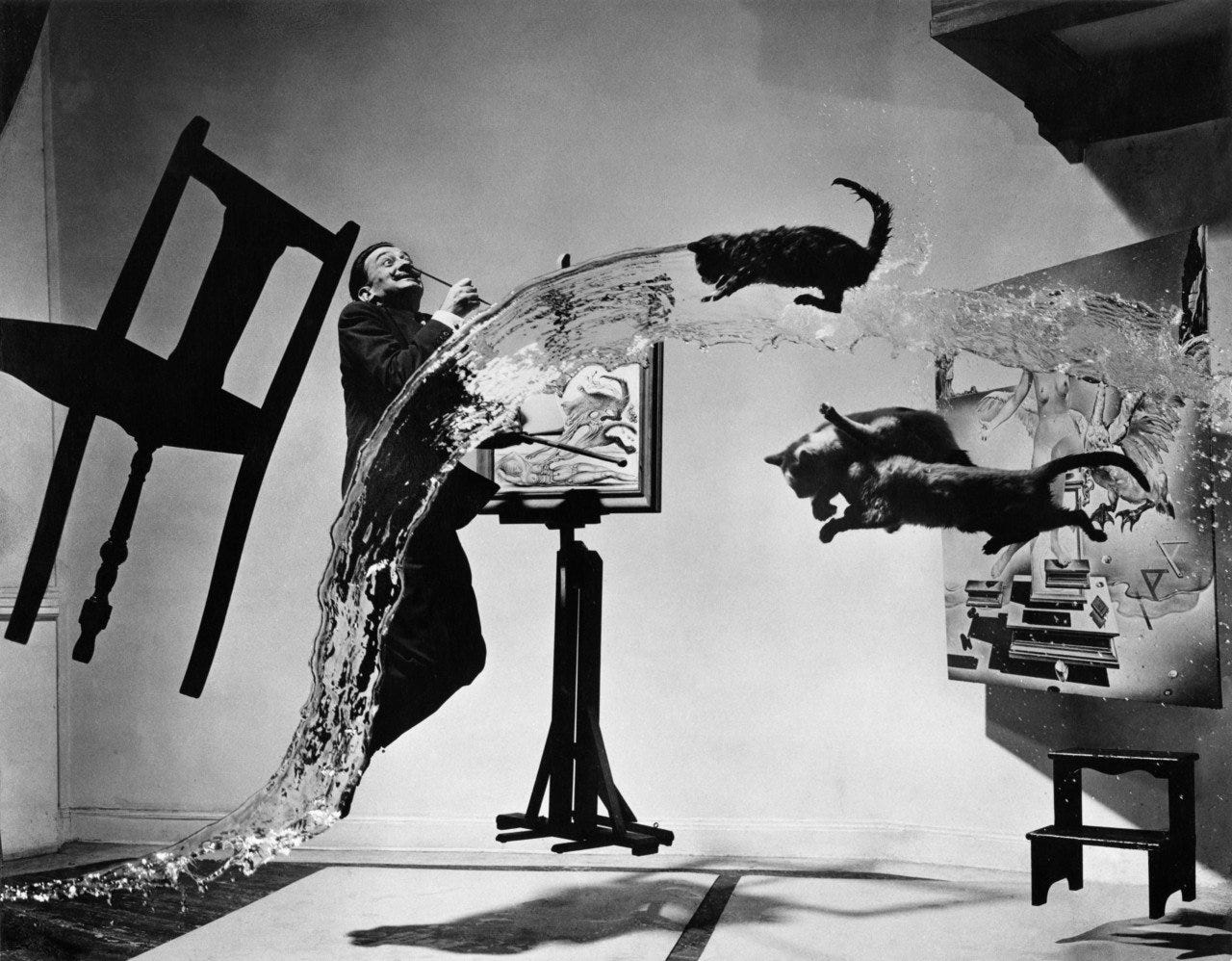
5. Philippe Halsman. Dalí Atomicus, 1948.
It took 28 attempts. After every try, he went into the darkroom to check the film.
Your score: 5 means you could teach this. 3 or 4 is a very good eye. 0 to 2? Now you know five new names.
How many did you get? Tell us in the comments, or share the quiz with a friend who knows their photographers.
The story behind photo 3
Lartigue's Racing Car, 1912: Why the Wheel Looks Like an Egg and the Caption May Be Wrong
The wheel of the racing car looks like an egg.
The spectators on the side of the road lean to the left, as if a strong wind were blowing. Jacques Henri Lartigue made the picture at the French Grand Prix in Normandy when he was 18. It became one of the best known images of speed ever made. Its caption may be wrong.
Its strange shapes, at least, have a simple explanation.
This story looks at how the picture was made and why it looks so strange. You will read what Lartigue wrote in his diary on the day of the race. You will also learn why one expert thinks the car is not the one Lartigue named.
The boy behind the camera loved cars.
A boy who loved cars
Lartigue grew up in a wealthy French family and began taking photographs as a small child. His father and his older brother Zissou took him to motor races. He photographed the cars, then drew them, then made sketches from his own photographs.
His first try at panning
In June 1912 the Grand Prix of the Automobile Club de France was held on public roads near Dieppe, over two days, the 25th and the 26th. Lartigue was near Le Tréport. He wrote in his diary: "The second one is coming. It's Boillot with Peugeot. I shoot as it speeds by at 180 and pan the camera to keep it in view. It's the first time I've tried this!"
Why the crowd leans and the wheel stretches
Panning means moving the camera with the subject. It explains the leaning people. Lartigue turned his camera to follow the car, so the background slid sideways during the exposure. The stretched wheel has another cause. According to the book 50 Photo Icons, his camera had a focal plane shutter. This kind of shutter does not open all at once. A thin slit moves across the film, so the top and the bottom of the picture are recorded at slightly different moments. The fast car moved while the slit travelled, and the round wheel came out stretched.
A car with the wrong name?
Lartigue glued the print into his album for 1912. He wrote under it: "Automobile Delage, Grand Prix de l'Automobile-Club de France, Le Tréport, 26 juin 1912." But according to David E. Junker, quoted by the Donation Jacques Henri Lartigue in Paris, the car is a Théophile Schneider, and it raced at the Grand Prix of 1913. No explanation has been found in Lartigue's diaries. The book 50 Photo Icons also notes that the sources do not agree on the exact day.
Fifty years in an album
For half a century almost nobody saw the picture. Lartigue trained as a painter and kept photographing for himself. In 1962, when he was in his late sixties, the agent Charles Rado showed his work to John Szarkowski, the new photography curator at the Museum of Modern Art in New York. Szarkowski gave him a show at the museum in 1963, and Life magazine published his photographs the same year.
Suddenly the old album of a rich boy from Paris became part of photography history. The leaning crowd and the egg shaped wheel were no longer mistakes. They were the speed itself.
This story was partly inspired by 50 Photo Icons, Hans-Michael Koetzle, Taschen.
Read it on the blog: Lartigue's Racing Car, 1912: Why the Wheel Looks Like an Egg and the Caption May Be Wrong
From Friday's issue
What Can You Show When You Can’t Photograph It?
What a project can still reveal when part of its story is out of reach.
See you next Wednesday.
Martin
Only want the Friday issue? You can turn off Wednesday emails and keep Photography, Reconsidered in your account settings.
Damn, one wrong. I know the Dalí but still got it wrong. I guess my years at RIT in the early 80s paid off.