

Something new: the free Wednesday Photography Quiz. Five photos to guess, a vote under each one, and the full story behind one of them. It is not switched on for current readers, so if you would like it, turn it on in your account settings. Here is the first one.
We show someone a photograph. Then comes the story.
The person in the portrait told us about something that happened years before we met. When we look at the photograph, we remember that conversation. Someone else looking at the same face has not heard what we heard.
We can make a portrait today. We cannot go back and photograph what happened then.
I’m interested in how we can share that earlier part of someone’s life when we cannot photograph it. A parent has told us about their childhood, or a friend about growing up in another country and we want some of what they told us to be part of the work.
The same difficulty comes up with places. We arrive in a mining town long after the mines have closed, wanting to understand what life was like when they were still working.
How can we tell that part of the story when we cannot photograph what happened?
Sometimes the events are still happening, but we just cannot get there to photograph them.
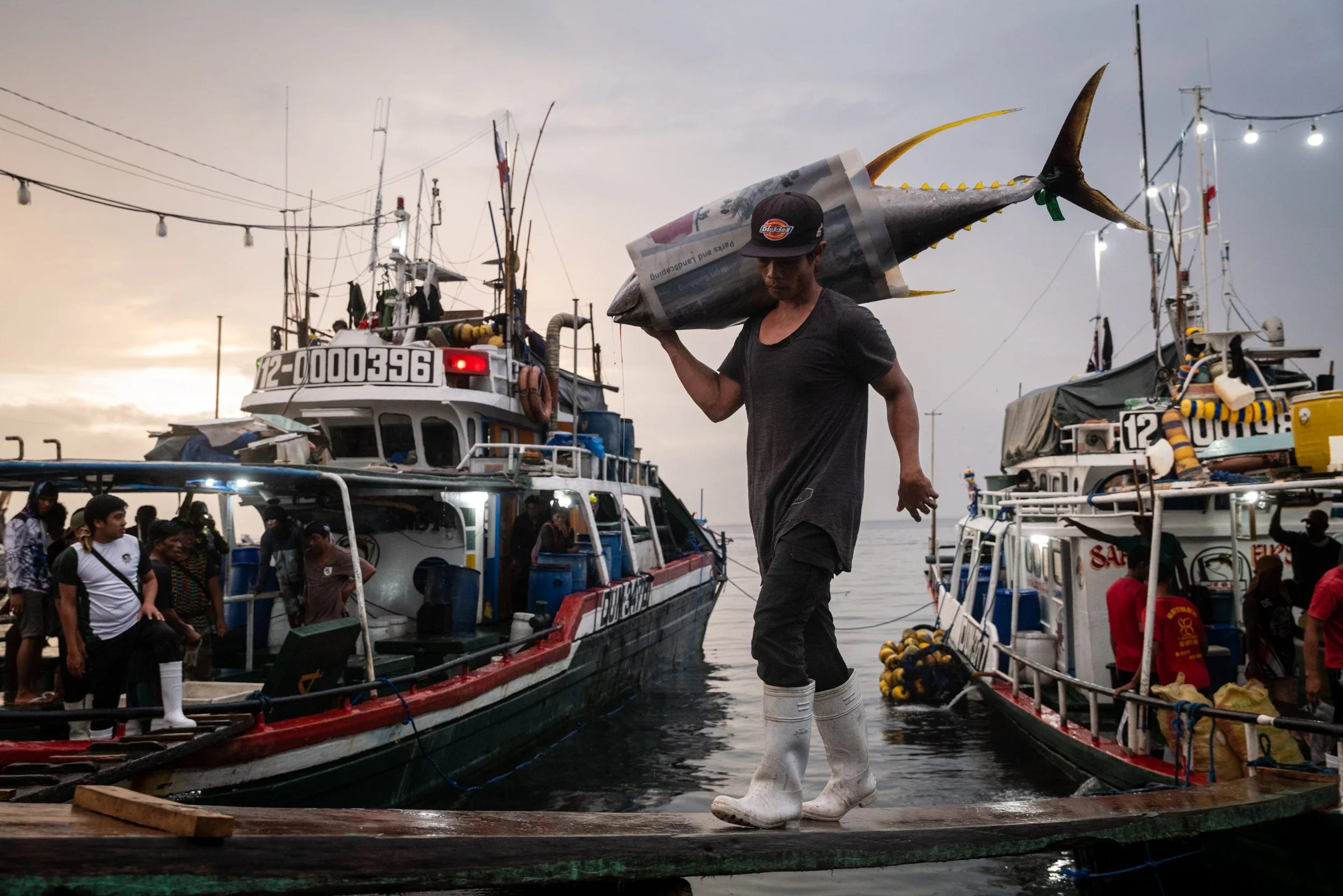
Nicole Tung · Overfishing in Southeast Asia
An investigation into the fishing industry in Thailand, the Philippines and Indonesia. Tung documents how overfishing and labour exploitation affect fishing communities, and how the seafood trade connects them to consumers around the world.
For Nicole Tung1, part of the story was out at sea.
She was photographing the fishing industry in Southeast Asia. She wanted images of working conditions aboard fishing vessels, and nets pulling up enormous quantities of fish. These would show parts of the industry that usually remained hidden.
But she could not get access to the vessels where she wanted to document those conditions.
“Those key images never happened,” she told me.
A much smaller project can leave us with the same feeling. We have photographs, but the part we most want someone to understand is missing from them.
Does losing that photograph mean losing that part of the story?
Tung continued working in ports and fishing communities. She spoke to fishermen who had returned from the boats and could describe what they had experienced there. She included what they told her alongside her photographs.
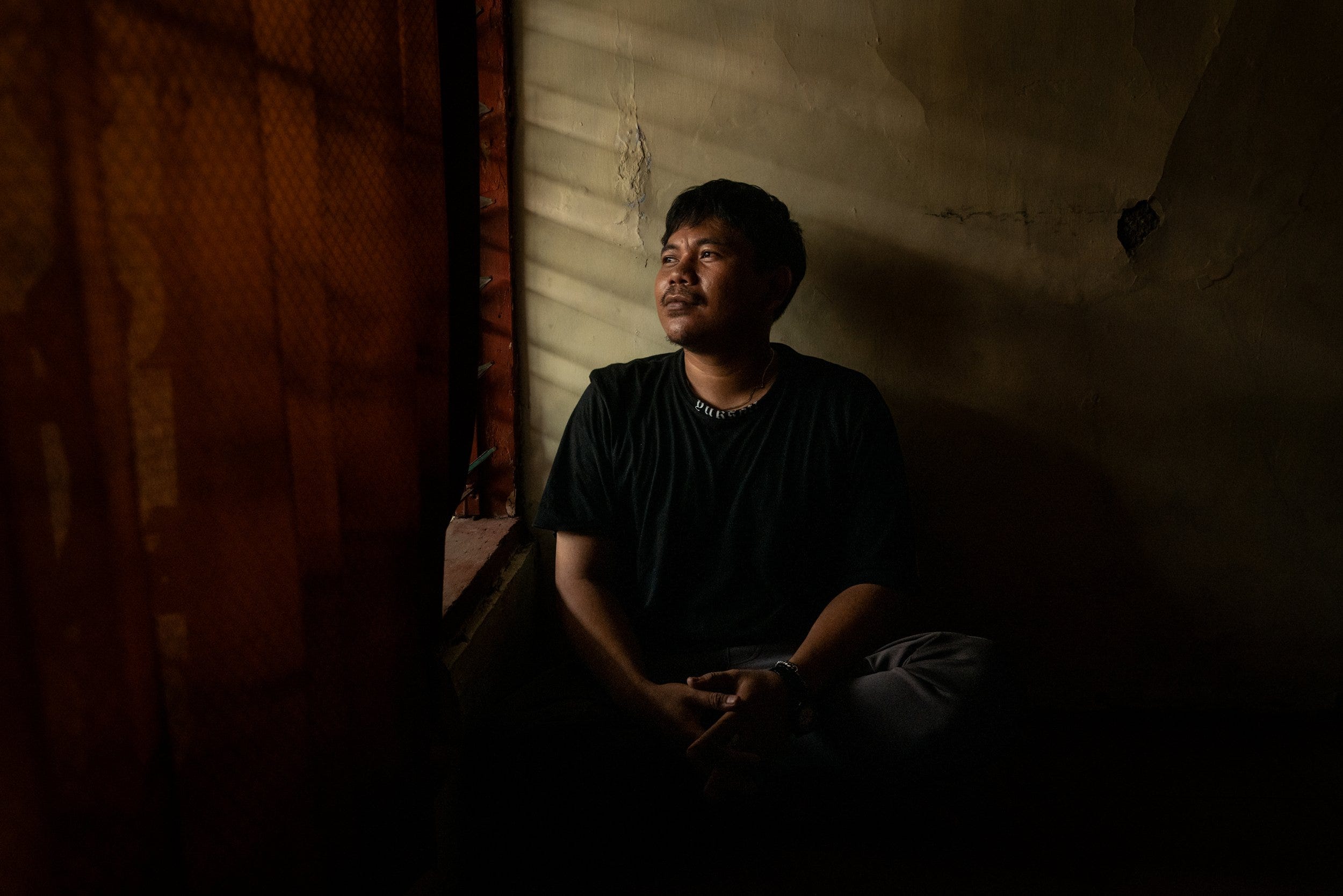
In Indonesia, she photographed fishermen who had witnessed abuse aboard the vessels.
I can see the fisherman in the portrait, but what I cannot learn from it is what he experienced at sea. His words give that part of the story a place in the project, even though Tung was not there to photograph it. She found people who could tell her what had happened.
Now, even with someone we know well, there still can be things we have never thought to ask.
Max Hirshfeld2 began asking his mother about Poland after his father died and he turned thirty. She was a Holocaust survivor, and he wanted to understand more of her life before he was born.
Max Hirshfeld · Sweet Noise: Love in Wartime
A photobook about Hirshfeld’s parents, both Holocaust survivors. It includes photographs from his 1993 trip to Poland with his mother and his writing about their family’s history.
Over the next few years, they talked about going there together. She wanted to show him the places she remembered. When they made the trip in 1993, he hoped that being there with her would help him understand what she had been through.
In the courtyard of her birth home, he asked her to stand in the centre while he photographed. As he moved closer, she bit her lower lip and began to cry. He kept photographing.
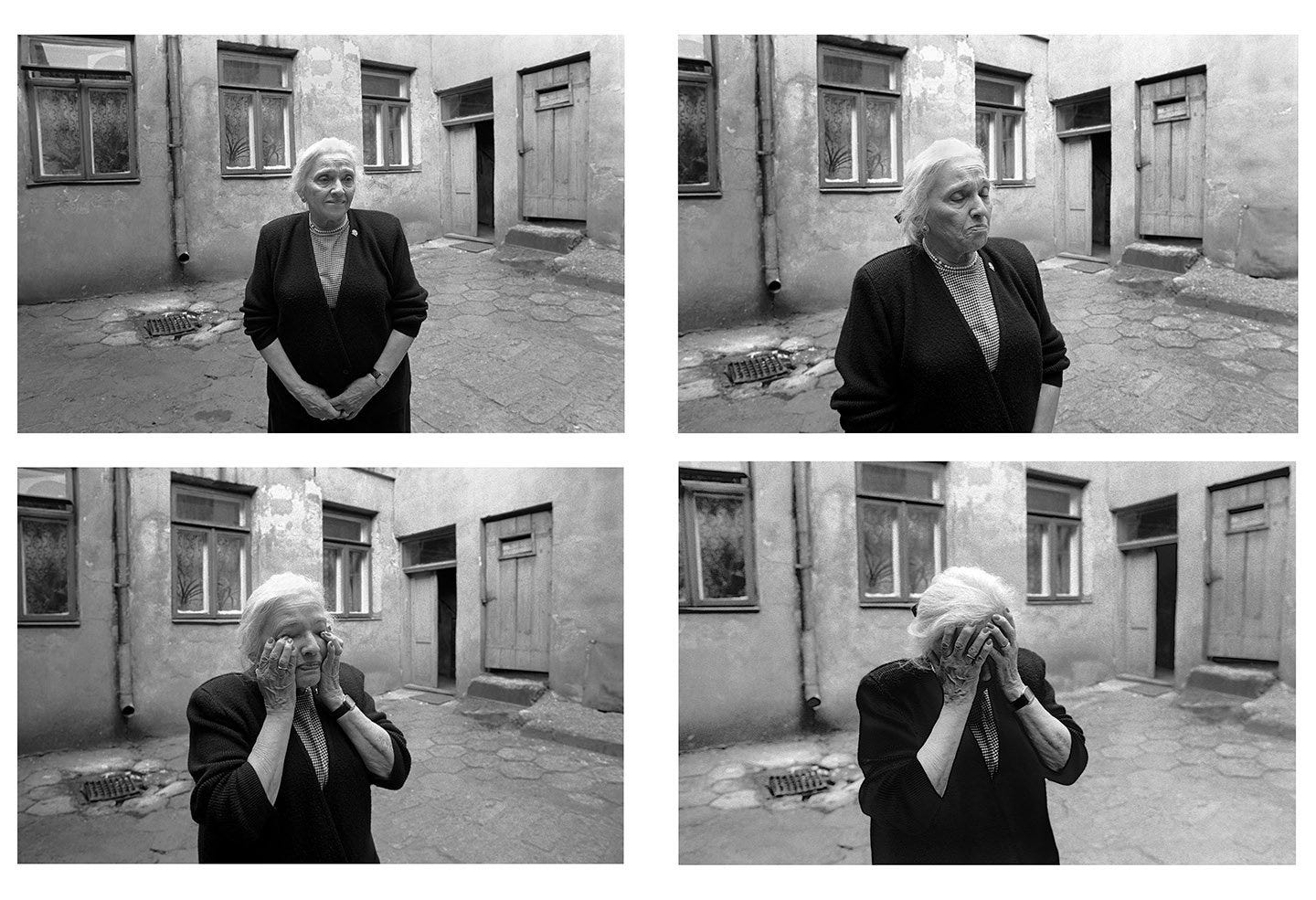
Looking back, Hirshfeld told me he had come to understand that his parents’ experiences would never be his own. The photographs helped him ask questions about their lives, but he could not be sure he would find answers.
He still regretted not asking more. The trip had given him photographs of his mother in the places she remembered, but there was still much about her life he wanted to understand.
For years, he was unsure how to bring the photographs and his writing together in a book. His attempts to tell his parents’ story in his own words felt hollow to him.
Then he opened a box his mother had given him before she died. Inside were letters his parents had written to each other during their three-year separation after the war.
They wrote about their lives while they were apart, and about their love for each other.
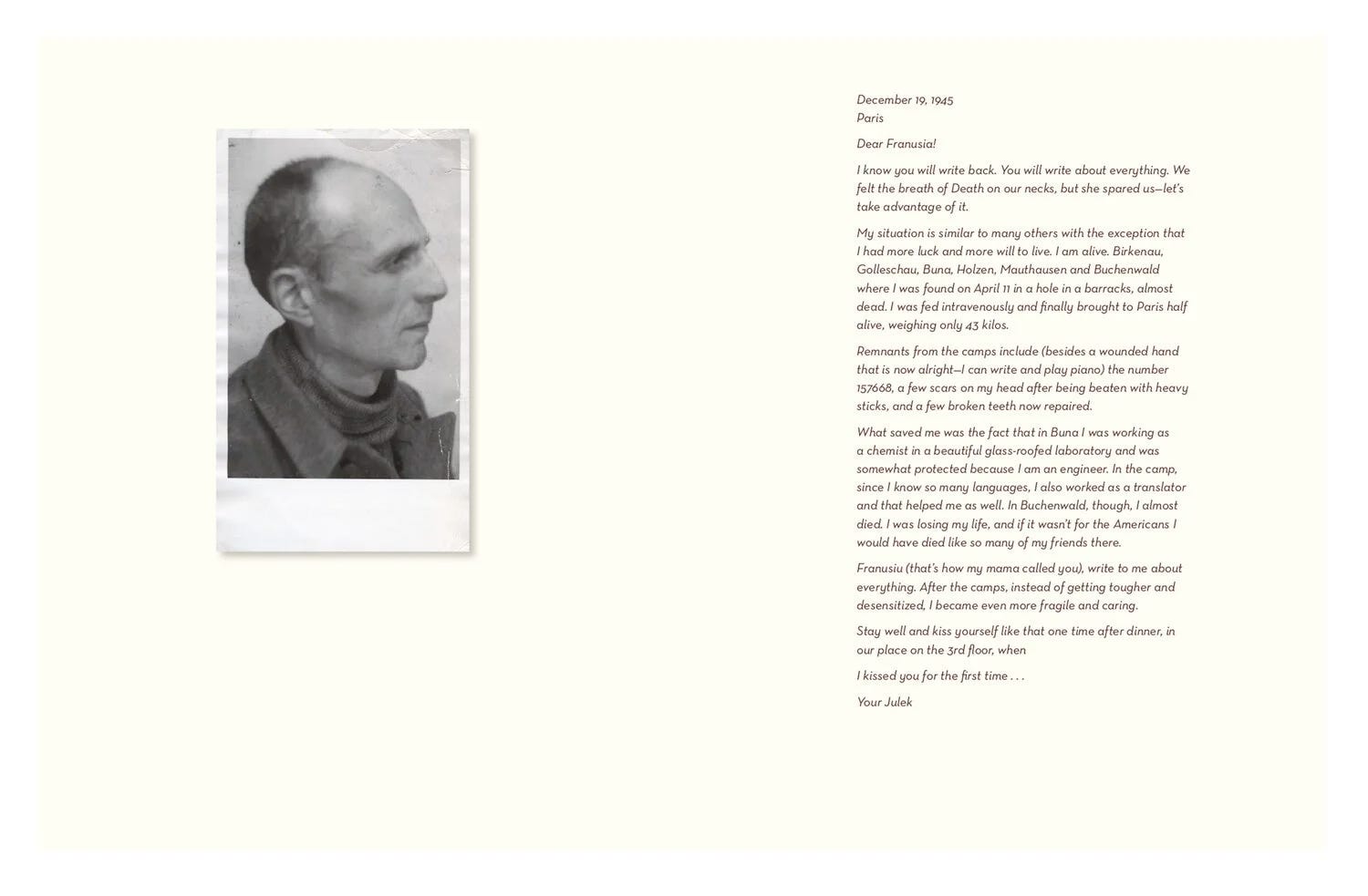
What interests me here is the difference between writing about his parents and letting them speak for themselves. The letters gave Hirshfeld the missing piece for the book. His parents could tell this part of their story in their own words, alongside his photographs and his account of the journey, so his became the form of Sweet Noise: Love in Wartime.
“Discovering the letters proved to be a second gift from my mother,” he told me.
Tung found people who could describe what she had been unable to photograph. Hirshfeld came home with photographs and questions. The letters brought his parents’ own words into the book.
These two projects leave me wondering what else we can photograph once we know more of the story. Someone is telling us what happened, and then they show us what they mean. Or a place begins to look different once we learn what happened there.
We cannot photograph the original event. But there may still be something to photograph now. What can these new pictures tell us about the past, and what would someone need to know to understand them?
